


Circuit Nordique de 10 jours : ascension guidée du Kilimandjaro depuis Moshi
Annulation gratuite
Jusqu'à 24 heures à l'avance pour un remboursement complet.
Billetterie mobile
Utilisez votre téléphone pour entrer à votre destination.
Langue du guide
Anglais, espagnol
Taille du groupe
Max 12 personnes
Description
Le programme inclut l’hébergement en camps de montagne, les repas quotidiens et les transferts locaux. En option, vous pouvez prolonger l’aventure avec une excursion de 90 minutes dans le cratère d’Ash Pit ou tenter une seconde tentative d’atteindre le sommet Uhuru depuis le camp Barafu, selon les conditions météo. Un départ tardif du camp est également disponible moyennant un supplément.
Itinéraire
Arrivée à Kilimandjaro et briefing
Transfert de l'aéroport international de Kilimandjaro à Moshi, accueil et briefing du soir avec les responsables.
De la porte de Londorossi au camp Mti Mkubwa
Enregistrement du permis, trek jusqu'au camp Mti Mkubwa, petite randonnée d’acclimatation (2 km, 1 h) vers un point plus haut, déjeuner et dîner au camp.
Mti Mkubwa → camp Shira 1
Petit‑déjeuner copieux, marche de 5 km (5‑6 h) jusqu’au camp Shira 1, déjeuner sur place.
Shira 1 → Shira 2
Trek vers le camp Shira 2, déjeuner, puis randonnée d’acclimatation de 2 km (1‑2 h) vers le Lava Tower avec gain d’altitude de 300 m.
Shira 2 → Moir Hut et progression vers le sommet
Marche de 14 km (5‑7 h) jusqu’au Lava Tower pour le déjeuner, puis continuation vers Moir Hut, la pente nord (12 km, 5‑6 h) offrant des vues sur les vallées de Tsavo et Amboseli, suivi du trajet vers le 3e camp de la grotte (8 km, 4‑6 h) et enfin le camp School Hut Summit (5 km, 4‑5 h).
Tentative d’atteindre le sommet et exploration du cratère
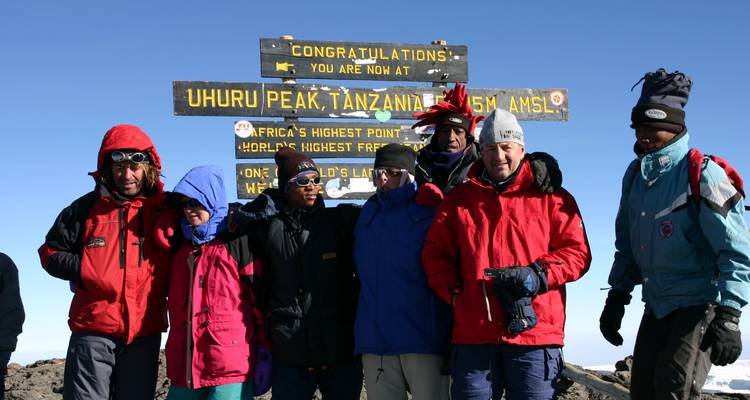
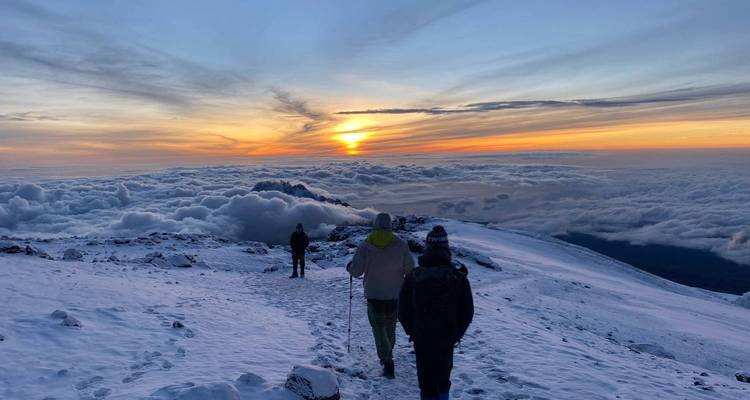
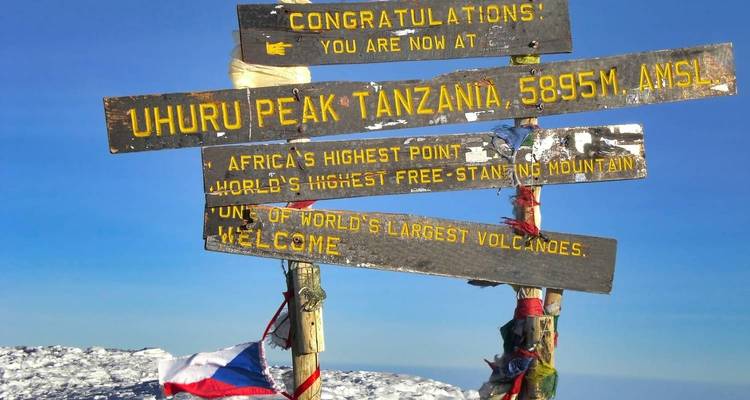
Départ à minuit du camp School Hut, ascension de 5 km (4‑6 h) jusqu’au Uhuru Peak, observation du lever du soleil (30‑40 min), puis marche sur le fond du cratère avec option d’excursion de 30 min sur les anciens glaciers.
Descente, transfert à Mweka Gate et départ
Petit‑déjeuner chaud, descente vers le camp Millennium, puis vers Mweka Gate, cérémonie de groupe et remise d’un certificat, transfert à l’hôtel à Moshi et retour à l’aéroport pour le vol de départ.
Point de rencontre
Inclus
- task_alt Accommodation
- task_alt Guide
- task_alt Meals
- task_alt Additional Services
- task_alt Transport
Exclu
- close Flights
- close Insurance
- close Optional
- close Additional Services
Questions fréquemment posées
What is included in the €3,416.42 price for the 10‑Day Northern Circuit Kilimaro climbing tour?
The price covers all accommodation from Moshi to the summit camps, a fully English‑speaking guide, all meals (breakfast, lunch, dinner and camp snacks), park permits, airport transfers in Moshi, vehicle transfers between camps, and the organized itinerary as described. It also includes a commemorative certificate, group celebration, and basic trekking equipment such as trekking poles. Personal expenses, optional activities, and tips for guides are not included.
Are flights to Tanzania covered in the tour price?
No, international or regional flights to Tanzania are not part of the quoted price. Travelers must arrange and pay for their own flights to Kilimanjaro International Airport (JRO) or Dar es Salaam and then connect to Moshi, where the tour’s airport transfer will pick them up.
Are there any additional fees that are not part of the quoted price?
Yes. Extras may include visa fees, travel insurance, personal items, tips for guides and porters, optional glacier walk, equipment rental (e.g., sleeping bag if not supplied), and any personal purchases or meals outside the scheduled program. The operator does not charge hidden fees, but you should budget for these common additional costs.
Can I pay for the Northern Circuit tour in installments?
The provider offers a payment plan for many of its tours, allowing a deposit to secure the booking followed by scheduled installments. Specific terms, such as deposit amount and installment schedule, should be confirmed directly with the tour operator before you book.
What is the cancellation and refund policy for this tour?
Cancellation terms are not listed in the source data. Typically, operators require a written notice and apply a sliding scale of refunds based on how far in advance the cancellation occurs. We recommend contacting the tour provider to obtain the exact cancellation deadlines, any non‑refundable deposits, and the process for receiving a refund.
Is travel insurance required or recommended for the Kilimanjaro climb?
Travel insurance is not mandatory according to the provided information, but it is strongly recommended. A policy that covers high‑altitude trekking, medical evacuation, and trip interruption will protect you against the risks of altitude sickness, injury, or unexpected changes to your travel plans.
When does the 12‑day Northern Circuit itinerary start each day and what is the daily schedule?
Each trekking day begins early, usually between 6:00 am and 7:00 am, with a brief breakfast before setting off. Walking periods range from 4 to 7 hours depending on distance and altitude gain, followed by lunch at camp, a short rest, and dinner in the late afternoon. Rest days are built into the itinerary, such as the acclimatization hike from Mti Mkubwa to a higher point. The final summit day starts at midnight for a sunrise ascent to Uhuru Peak.
Where is the meeting point in Moshi and how is airport transfer arranged?
The meeting point is the designated hotel or lodge in Moshi as confirmed by the operator. Upon arrival at Kilimanjaro International Airport, a driver will meet you with a sign bearing your name and transport you to the Moshi hotel for the evening briefing. All airport transfers are included in the tour price.
How much luggage can I bring and what gear is provided?
You may bring one main duffel bag (up to 20‑25 kg) and a personal day pack for on‑trail items. The tour supplies essential trekking gear such as a sleeping bag, trekking poles, and a basic camp stove. Personal items like waterproof jackets, boots, and altitude medication must be packed by you. The guide will advise on the exact weight limits during the pre‑tour briefing.
How many days should I allocate before or after the climb for acclimatization or rest?
It is advisable to arrive at least one full day before the first trek to rest, complete the airport transfer, and attend the evening briefing. After the descent to Mweka Gate, most participants spend an additional night in Moshi to recover before traveling home. Adding an extra day for optional sightseeing or additional rest is optional but can improve recovery.
What passport validity and vaccination requirements apply?
Your passport should be valid for at least six months beyond your intended departure date. A yellow‑fever vaccination certificate is required if you are arriving from a country with yellow‑fever risk. Other routine vaccinations (hepatitis A/B, typhoid, tetanus) are recommended. Verify the current health entry requirements with the Tanzanian embassy or a travel health clinic.
Is a medical certificate or fitness test required before joining the climb?
The source does not list a mandatory medical certificate, but most high‑altitude operators request a recent health questionnaire and may ask for a doctor’s clearance, especially for participants over 55 or with pre‑existing conditions. It is prudent to obtain a medical check‑up and bring any relevant documentation when you travel.
What fitness level is recommended for the Northern Circuit route?
The Northern Circuit is a moderate‑to‑high difficulty trek. Participants should be comfortable walking 5–7 hours per day on uneven terrain with altitude gains of up to 300 m between camps. Prior experience with multi‑day hiking, good cardiovascular fitness, and the ability to recover quickly at altitude are essential for a safe and enjoyable climb.
Is the tour suitable for families with children, and what age limits apply?
The tour is family‑friendly for older children, typically those aged 12 years and above who can handle long days of trekking and altitude. Children under 10 are generally not permitted on high‑altitude routes for safety reasons. Parents should ensure that younger participants have appropriate fitness and that the family is comfortable with the physical demands.
Can senior travelers (55+) safely complete the Northern Circuit?
Senior travelers can complete the circuit if they are in good health and have received medical clearance. The itinerary includes acclimatization days that help reduce altitude‑related risks. However, the trek involves long walking periods and significant altitude gain, so seniors should assess their fitness level, consider additional rest days, and discuss any concerns with the guide before booking.
Which key sights and viewpoints are included on the Northern Circuit route?
The circuit visits several iconic points: the Lava Tower with panoramic views, the northern slope overlooking the Tsavo and Amboseli valleys, the summit camp at Uhuru Peak for sunrise, and an optional glacier walk on the crater floor. Along the way you also experience diverse alpine ecosystems, volcanic landscapes, and the dramatic descent to Mweka Gate.
Is there free time for sightseeing in Moshi or at the base of Kilimanjaro?
The itinerary provides limited free time. After arrival, you have an evening briefing and a night at a Moshi hotel, which can be used for a brief walk around town. Following the descent, there is a final night in Moshi before departure, allowing a short opportunity to explore local markets or relax before your flight.
Is this tour a good choice for first‑time visitors to Tanzania?
Yes. The Northern Circuit offers a well‑structured acclimatization schedule, professional English‑speaking guides, and comprehensive logistics, making it suitable for travelers experiencing Tanzania and Kilimanjaro for the first time. The route combines scenic variety with gradual altitude gain, which helps reduce the risk of altitude sickness for newcomers.
Which type of traveler gets the most value from the 10‑Day Northern Circuit Kilimanjaro climb?
Active hikers who want a thorough Kilimanjaro experience, families with older children, and adventure‑oriented travelers seeking a guided, fully supported trek benefit most. The tour’s blend of acclimatization hikes, diverse landscapes, and summit sunrise provides strong value for those who prefer a managed itinerary over independent planning.
What should I prepare before booking the Northern Circuit tour?
Prepare by completing a fitness program that includes long hikes and cardio work, acquiring proper trekking gear (boots, layered clothing, sleeping bag), obtaining a valid passport and any required visa, arranging travel insurance that covers high‑altitude trekking, and scheduling a medical check‑up. Review the detailed itinerary, confirm the payment schedule, and ensure you have enough budget for optional tips and personal expenses.
How does the cost of this guided tour compare with organizing the climb independently?
The guided price of €3,416.42 includes permits, guides, meals, accommodation, transport, and logistical support, which can amount to a similar or higher cost when arranged independently. Independent planning often requires separate purchases for permits, guide services, porters, transport, and equipment, and may involve hidden fees or logistical challenges. The guided tour reduces risk and simplifies budgeting, offering a transparent total cost.
Can I attempt the Kilimanjaro summit without a guide, and what are the risks?
Climbing Kilimanjaro without a licensed guide is not permitted by Tanzania National Parks; all routes require a registered guide and support team. Attempting an unguided ascent would be illegal, unsafe, and could result in fines or expulsion from the park. Guided tours provide essential expertise, emergency response, and navigation, significantly reducing the risks associated with high‑altitude trekking.
Vous pourriez aussi aimer
Plus de visites dans la même destination

Tanzania
Randonnée 7 jours Marangu – Kilimandjaro depuis Moshi
Tanzania
Randonnée familiale de 8 jours sur le Rongai du Kilimandjaro
Tanzania
Safari familial en Tanzanie – 8 jours d’aventure tout‑terrain
Tanzania
14‑Day Tanzania & Zanzibar Safari with School Volunteering and Dolphin Swim
À partir de
$3,416 personne