Lilshira


How Many Days in Cairo Do You Need? Full Guide
Back to articles
On this page
- How many days in Cairo do you actually need?
- Cairo trip length: what each duration buys you
- 1 day in Cairo: the pyramid-only run
- Cairo in 2 days: the pyramids plus the historic core
- 3 days in Cairo: the plan most first-time visitors should book
- 4 days in Cairo: what the extra day is actually for
- What to see in Cairo, and what each sight costs you in hours
- The Giza pyramids day trip, without losing the rest of the day
- Grand Egyptian Museum or the Egyptian Museum: the choice that sets your day count
- Cairo's distances, traffic, and where to base yourself
- Adding Alexandria, Luxor or a Nile cruise without rushing Cairo
- Frequently asked questions
How many days in Cairo you need comes down to a range: three days is the practical minimum for a first visit, and four is better. That covers the Giza pyramids, one museum, and the historic Islamic and Coptic quarters at a pace that does not collapse into traffic.
How many days in Cairo do you actually need?
Cairo is not a city you see by wandering. It is a sprawl of distinct districts separated by distance and congestion, and the number of days you need is set far more by how much time you spend moving between them than by how much there is to look at. Understanding that one fact is what turns a rushed trip into a comfortable one.
The answer is a range, and picking your number is really a question about how you want to spend your hours. Cairo rewards a specific kind of planning: the major sights are extraordinary, and the time between them is the part nobody warns you about.
Here is how the durations differ in practice:
- 1 day — the pyramids, the Sphinx, and a drive back through the city. Enough to say you have been, not enough to understand where.
- 2 days — pyramids plus one full day in the historic core, usually Islamic Cairo or the Egyptian Museum. This is the tightest version that still feels like a real visit.
- 3 days — the standard first visit. Pyramids, one museum, the Citadel and Khan el-Khalili, plus either Coptic Cairo or a Nile evening.
- 4 days — the comfortable version. Adds Saqqara and Dahshur, a second museum, and enough slack that one slow morning does not derail the plan.
- 5 to 7 days — Cairo as a base rather than a stop. This is the range where day trips to Alexandria or Fayoum, and a slower look at Old Cairo, start to fit.
The mistake most travellers make is booking two days, arriving tired, and losing half of the first one. If Cairo is the main event of your trip rather than a stopover, three days is the honest number. The Cairo city page lists the districts and sights, and the Egypt destination page is the place to start if Cairo is one part of a longer route.
Long-haul arrivals deserve a specific warning. Flights into Cairo from Europe, Asia and the Americas often land late in the day, which means the first day is frequently half gone before it starts. If your itinerary assumes a full first day, add one day to whatever number you had in mind, or accept that the first day is a transfer day.
Cairo trip length: what each duration buys you
Think of the length of your trip as a budget you spend on three separate zones, not on a list of sights. The pyramids sit west of the city on the Giza plateau. The historic core, including the Citadel, Khan el-Khalili, Al-Azhar and the mosques of Islamic Cairo, sits in the east. Old Cairo and Coptic Cairo sit south of the centre, and the airport sits northeast, well away from all three.
Each zone costs you a half day at minimum once travel is included, and some cost more. That arithmetic is why the day count matters so much. A traveller who plans four zones into two days will spend most of the trip in a vehicle.
It also helps to separate days from nights when you count. A trip described as three days is often two usable days and three evenings, and the evenings are not wasted time in Cairo: the bazaar is better after dark, the Nile river is at its best at sunset, and dinner is late. If you are counting tightly, three nights in the city gives you roughly two and a half full days of sightseeing and three good evenings.
Realistic door-to-door times are the other half of the budget. The Giza plateau sits around half an hour from the centre in light traffic and considerably longer at peak. The Citadel to the plateau run, the hardest crossing in the city, is worse than the map suggests and should be treated as a buffer rather than a fixed number. The airport leg is the least predictable of all, and it sits in a different direction from every zone you will actually visit. Build that leg into the first and last day rather than the middle, where it would cost you a sight.
What each duration realistically covers:
- 1 day — Giza plateau, the Sphinx, and a scenic return through the city. One zone.
- 2 days — Giza plus the historic core, or Giza plus one museum. Two zones.
- 3 days — Giza, the historic core split across two visits, and one museum. Three zones, comfortably.
- 4 days — the above plus Saqqara and Dahshur, and either Coptic Cairo or a second museum.
- 5 to 7 days — everything above plus a day trip outside the city and time to revisit what you liked.
Put in hours rather than days, the budget looks roughly like this. The Giza plateau with the Sphinx and a viewpoint is about half a day. The Citadel, Al-Azhar and the lanes between them are another half day on foot. Coptic Cairo and the churches of Old Cairo are a third half day. A serious museum visit is a fourth. Saqqara and Dahshur together take a full day once the drive is included, and the airport leg is the wildcard that can take anywhere from under an hour to well over two depending on the hour you travel.
Three half days plus one full day is therefore the shape of a complete Cairo visit. That is what the three-day and four-day plans below are actually distributing, which is why cutting days out of the middle of the trip rather than the edges is what makes a short visit feel thin.
One more variable: the season and the day of the week both change how long each zone takes. Friday mornings, when many sites and shops keep different hours, are not the day to plan a dense route. Plan around the week as well as the clock.
1 day in Cairo: the pyramid-only run
One day in Cairo is a real option, and the only sensible way to spend it is on the Giza plateau. The pyramids and the Sphinx are the reason most people come, and trying to add the historic core to the same day produces a trip that is mostly traffic.
A one-day plan that actually works looks like this:
- Start early, before the heat and before the coaches arrive. The plateau opens in the morning and the first hour is by far the best.
- Spend the morning on the plateau itself. The three pyramids, the Sphinx, and the viewpoints that show all of them in one frame take longer than people expect.
- Have lunch away from the plateau, then decide between a museum or a drive through the city depending on your energy.
- If you have an evening flight, allow generous time for the airport run. Cairo's traffic does not respect optimistic schedules.
If you are on a long layover rather than a full day, the same logic applies in compressed form. Choose one zone. A layover is enough for the pyramids if you move decisively, and not enough for the pyramids plus the Citadel plus a market.
What a single day will not give you is the second half of Cairo: the medieval city, the bazaars, the churches of Old Cairo, the Nile at dusk. Those are the parts people remember most, and they need a second day.
Deciding what to skip on a one-day trip is easier than it sounds. Skip the bazaar, because Khan el-Khalili is at its best in the evening and you will not be there. Skip the Citadel, because it is on the far side of the city from the plateau and the drive eats the afternoon. Keep the pyramid day simple, and resist the urge to add a second zone on the way back, which is the mistake that turns a good day into a long one.
Cairo in 2 days: the pyramids plus the historic core
Cairo in two days works if each day owns one zone. Day one is the Giza plateau. Day two is the historic core, and you choose which part of it matters more to you.
The strongest two-day split for most travellers:
- Day one — the Giza plateau in the morning, the Sphinx, and a return through the city in the afternoon. If you have energy left, add a museum rather than a market.
- Day two — the Citadel in the morning for the view over the city, then walk down into the streets around Al-Azhar and Khan el-Khalili, and finish with an evening by the Nile.
An alternative, and a good one if you care more about the ancient world than the medieval one, is to make day two a museum day: the Grand Egyptian Museum or the Egyptian Museum, or both if you accept a long, focused day indoors.
Two days is the point at which you must accept that something gets cut. Decide in advance what that is, rather than discovering it at four in the afternoon. Travellers who decide on the plane tend to end up with two half-days instead of one full one.
What makes two days work rather than fall apart is transport. Book a driver or a car for the transfer-heavy mornings, and treat the rest of the day as walkable within a single district. Cairo is at its best on foot inside one district; a day spent entirely in cars is not.
3 days in Cairo: the plan most first-time visitors should book
Three days is where Cairo stops feeling like a checklist. You get the pyramids without rushing, a proper look at the medieval city, and one museum, with enough slack that a slow start does not cost you the trip. A cairo itinerary 3 days long works like this:
- Day 1 — Giza. The plateau and the Sphinx in the morning, and a museum or a slow afternoon afterwards. Keep the evening light.
- Day 2 — Islamic Cairo. The Citadel first, for the panorama and the mosques, then the walk down through Al-Azhar and the surrounding lanes, then Khan el-Khalili in the late afternoon and early evening when it is at its liveliest.
- Day 3 — Old Cairo and the river. Coptic Cairo and the churches in the morning, a slower afternoon, and a felucca on the Nile toward sunset.
That structure has a logic worth understanding: each day stays inside one zone, so you absorb one set of travel times rather than three. It also front-loads the thing most people care about most, while they still have energy for it.
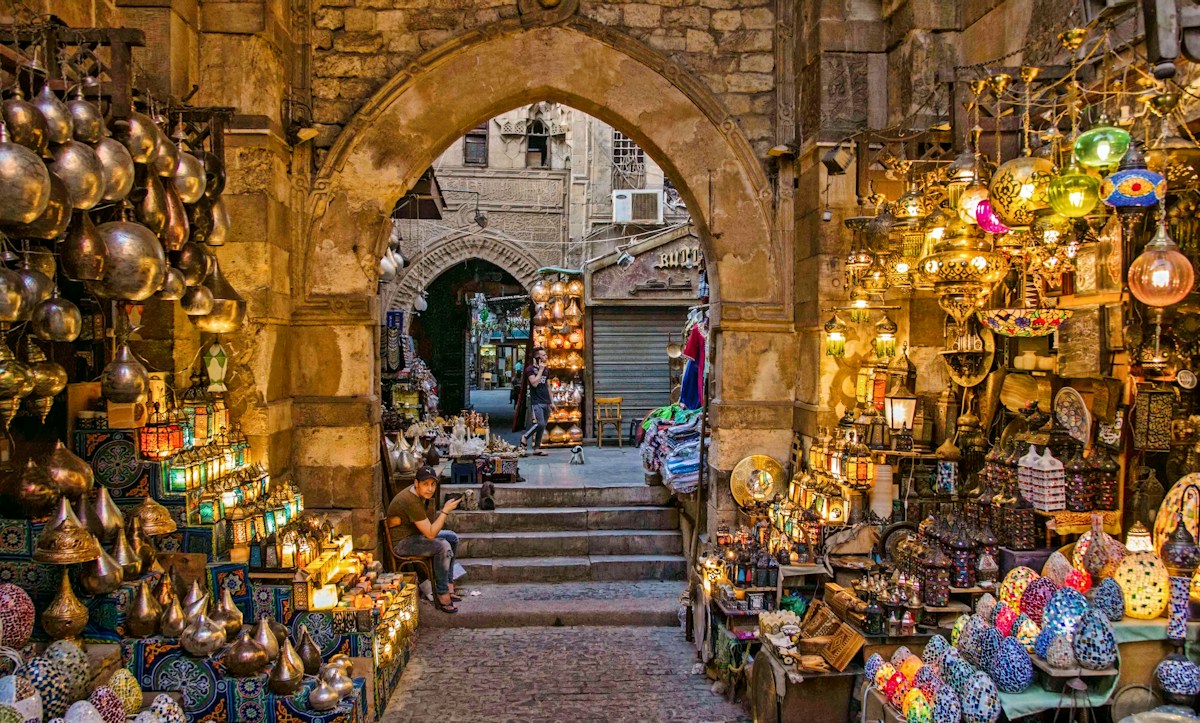
If ancient Egypt is your priority rather than medieval Cairo, swap day two for a museum day and move the Citadel and the bazaar to day three. The three-day count is robust to that swap because it has slack built in.
Three days is also the shortest duration at which a day trip to Saqqara and Dahshur can be added without dropping something else. If you are deciding between three and four days, that excursion is usually the reason to choose four.
Two practical notes make a three-day plan survive contact with reality. Friday, when many sites and shops keep different hours, is not the day to schedule a dense route; put the outdoor sites on a different day and treat Friday as your walking and neighbourhood day. And evening flights are common, so keep the last morning light rather than booking a final museum visit you will have to abandon halfway through.
One more variable worth building in: public holidays and school breaks in your own market affect the crowd levels on the plateau and inside the bazaar, sometimes more than the season does. A week that is quiet in March can be busy in late March, and a museum that feels serene in the first week of a month can be packed in the last.
4 days in Cairo: what the extra day is actually for
Four days is not a stretched version of three. It buys you two specific things: the older pyramid fields to the south, and the freedom to slow down.
The strongest use of the fourth day is Saqqara and Dahshur. These are the earlier chapters of Egyptian pyramid building, and they are the reason many travellers find Giza more meaningful afterwards rather than less. The Step Pyramid at Saqqara and the Bent and Red Pyramids at Dahshur sit south of the city and are usually combined into a single day. They are also less crowded than the Giza plateau, which changes the experience considerably.
If that does not appeal, the fourth day can go to one of these instead:
- A second museum, so the Grand Egyptian Museum and the Egyptian Museum are not forced into one exhausting day.
- A deeper pass through Coptic Cairo, including the older churches and the lane between them.
- A day with nothing scheduled, spent in one neighbourhood on foot.
- A Nile dinner or a longer felucca sail, which is a different city entirely after dark.
Four days is also the first duration where a late arrival or an early departure does not gut the trip. That buffer is worth more than an extra sight for most travellers, particularly on a long-haul itinerary where the first day is usually a write-off.
There is a quieter benefit too. With four days you can afford one unplanned afternoon, and Cairo is one of the few cities where that is genuinely rewarding. Sit in a cafe near Al-Azhar, walk a street because it looks interesting, or take a felucca with no destination. Those hours are usually what people describe when they get home, and they only exist if the schedule has room for them.
What to see in Cairo, and what each sight costs you in hours
Which sights you choose depends on your interests, but what they cost you in time is reasonably predictable. The list below groups the main sights by the block of the day they realistically consume, including travel. Use it to build a day that fits rather than one that looks good on paper.
- The Giza plateau and the Sphinx — half a day, and more if you go inside a pyramid or ride out to a viewpoint. Best in the first hours after opening.
- The Grand Egyptian Museum — half a day at minimum, and easily a full one if you are thorough. The scale is the point.
- The Egyptian Museum in Tahrir — half a day. Smaller and older, and closer to the historic core, which makes it easier to combine.
- The Citadel — two to three hours including the mosques inside and the view over the city.
- Al-Azhar and the lanes around it — two hours on foot, longer if you stop.
- Khan el-Khalili — two hours to browse, and it is much better after dark than at midday.
- Coptic Cairo and the churches of Old Cairo — half a day, including the walk between them.
- A felucca on the Nile — one to two hours, ideally at sunset.
- Saqqara and Dahshur — a full day once travel is included.
Two things change these numbers. First, heat: the outdoor sites are half as enjoyable in the middle of a hot day, and tour groups are densest at the same hours. Second, tickets and access: the museums and some sites have their own booking arrangements and separate tickets for special galleries or interior access, so confirm what your ticket includes before you build a day around it.
The Giza pyramids day trip, without losing the rest of the day
Organising a visit to the plateau is straightforward and easy to get wrong. It is close enough to the city to be a half-day, and far enough, in traffic terms, that it can eat a whole one.
What actually determines the experience:
- Arrival time. Early is better for light, heat and crowds, in that order. The difference between the first hour and the third is significant.
- How you move on the plateau. It is larger than it looks, and walking between the far viewpoints costs time. Decide in advance whether you are walking, taking a vehicle, or riding.
- The return trip. The drive back into the city is the unpredictable part. Leave the plateau before you are tired rather than after.
- What you add. Adding Saqqara or a museum to the same day is possible, and it makes a long day rather than a half one. Do one, not both.
The plateau is also the place where Cairo's tourist economy is most concentrated, which means unsolicited offers, unofficial guides and persistent sellers. This is normal rather than dangerous, and the practical response is a clear, polite no and a decision made in advance about what you actually want to buy or do. Agreeing to anything on the spot is what creates the problem.
If you want the plateau paired with the earlier pyramid fields in a single organised day, a day tour to the pyramids, Saqqara and Dahshur is the straightforward way to do it without arranging transport yourself. The Giza city page covers the neighbourhood around the plateau if you would rather stay close to it.
Grand Egyptian Museum or the Egyptian Museum: the choice that sets your day count
Cairo now has two major museums, and choosing between them is a day-count decision as much as a taste one. The Grand Egyptian Museum is on the Giza side, built at a scale that suits a long visit. The Egyptian Museum in Tahrir is in the centre, older, and closer to the rest of the historic city.
How to choose:
- Choose the Grand Egyptian Museum if you want the headline collection in a modern building, are basing your day around Giza, and have at least half a day to give it.
- Choose the Egyptian Museum if you want to combine a museum with Islamic Cairo or the centre, or if your time is short and you want a denser, quicker visit.
- Choose both only if you have four or more days, and put them on separate days. Doing both back to back is a recipe for museum fatigue.
One practical note that saves real time: museum opening hours, ticketing and which galleries are open all change. Check current arrangements before you travel rather than relying on advice from an earlier year, and book online where that option exists. This is one of the few parts of a Cairo trip where a small amount of advance checking pays off directly.
There is also a cost dimension worth flagging without quoting figures: multiple museum and site visits add up, and a combined or multi-site ticket, where one is offered, can be better value than individual entries. Ask at the first site you visit.
The museums pass question is worth a moment of your own. A pass that bundles the two major collections plus the Giza-side entries tends to make more sense for anyone visiting more than one paid site, because the individual entries add up faster than the bundle. What the pass includes changes, and validity rules differ, so confirm the current scope at the first ticket window rather than assuming yesterday's arrangement still holds. If you are only visiting one museum, a pass is unlikely to be worth it.
Pacing is the other half of the decision. A museum visit is mentally heavier than an outdoor site, and two large collections in one day produce a kind of fatigue that makes the second one a blur. If both museums matter to you, put them on separate mornings and spend the afternoon doing something entirely different. That single adjustment is usually worth more than any optimisation of which one you see first.
Cairo's distances, traffic, and where to base yourself
Traffic is the single largest thief of time in a Cairo itinerary, and it is the thing first-time visitors consistently underestimate. Distances on a map do not correspond to minutes on the road, and the difference between a good day and a frustrating one is often just the order in which you move.
The practical consequences:
- Group by zone, not by priority. Doing your top three sights in one day across three districts costs more time than doing them in the right order.
- Use the early morning. Roads are quietest before the working day starts, which is another reason to reach outdoor sites first.
- Avoid crossing the city at peak hours if you can. Plan a long lunch or an indoor stop to sit out the worst of it.
- Allow a real buffer for the airport. The airport is far from most of the districts you will stay in, and the drive is the least predictable leg of the trip.
Where you base yourself matters for the same reason. Staying near the historic core puts the Citadel, Al-Azhar and Khan el-Khalili within easy reach. Staying on the Giza side puts the plateau and the Grand Egyptian Museum close. Staying downtown or near the river splits the difference and gives you the Nile in the evening.
There is no single correct base. There is only the question of which zone you will visit most, and whether you are willing to pay for that proximity in other trips. Two nights in one area and two in another is a legitimate strategy, and it saves more time than most travellers expect.
The transport mode you choose matters as much as the base. For long hops across the city, a private car or a booked driver is usually the most predictable option and the one that saves the most time. For short, fixed legs along the river corridor, the metro is fast, cheap and unaffected by traffic, though it does not reach every district you will want. Ride-hailing is widely available and works well for point-to-point trips, with the caveat that a driver finding you in a busy area can take longer than the drive itself.
Walking is underrated inside a single district. The lanes around Al-Azhar, the streets of Coptic Cairo and the area around the bazaar are all better on foot than from a window, and once you are in the right zone the distances are short. The trick is to use vehicles to cross between zones and your feet to explore within them, rather than doing everything by car.
Adding Alexandria, Luxor or a Nile cruise without rushing Cairo
Cairo sits at the head of a country that rewards extension, and the most common planning error is bolting an extension onto too few Cairo days. Each of the main add-ons has its own time cost.
- Alexandria — a long day trip, or better, an overnight. The drive or train each way takes a substantial part of the day, so a day trip leaves you with only a few hours on the ground. The Alexandria city page is a useful starting point for planning the extension.
- Luxor and the Nile Valley — a separate trip in its own right, reached by a short flight. Give it at least two nights, and more if you want the Valley of the Kings done properly.
- A Nile cruise — a multi-day commitment between the Nile Valley cities, not a Cairo add-on. It belongs in the middle of a longer Egypt itinerary, not at the end of a short one.
The rule of thumb is simple: extensions should come out of the extension's own budget, not out of Cairo's. If your Egypt trip has seven days in total, two or three of them are Cairo at most, and the rest belongs to the south. Trying to hold Cairo at three days while adding Luxor usually means shortchanging both.
Sequencing matters as much as the day count. Start in Cairo and move south, rather than ending in Cairo, for two reasons. First, the ancient sites in the Luxor area are the emotional peak for many travellers, and finishing there is better than finishing with a traffic-clogged airport run. Second, if a flight is delayed or a connection slips, a buffer at the end of a trip is worth more than one at the beginning when you are still fresh.
If you are joining an organised route, a longer Egypt tour that combines Cairo with Luxor and Alexandria is often the more efficient way to see both without rebuilding the logistics yourself, such as the six-day Cairo, Luxor and Alexandria tour. The trade-off is fixed dates and less spontaneity, which matters more in Cairo than in most cities, because the best parts of it are unplanned.
Frequently asked questions
Is 3 days enough for Cairo?
Yes, three days is enough for a complete first visit: the Giza plateau, the historic Islamic core including the Citadel and Khan el-Khalili, one museum, and either Coptic Cairo or a Nile evening. It is the shortest duration that includes genuine slack, which is what makes it feel unhurried rather than packed.
Should I stay in Giza or downtown Cairo?
Stay on the Giza side if the plateau and the Grand Egyptian Museum are your priority, and near the centre or the river if you plan to spend more time in Islamic and Coptic Cairo. Downtown splits the difference and gives you the Nile in the evening. Two nights in each area is a reasonable compromise for a four-day trip.
Can I see the pyramids and the Egyptian Museum in one day?
It is possible and it makes for a long day rather than a comfortable one. The practical version is the pyramids early, a break away from the plateau, and the museum in the afternoon. If you want to enjoy either properly, put them on separate days and accept a fourth day.
How far are the pyramids from central Cairo?
The Giza plateau is on the western edge of the city, roughly half an hour from the centre in light traffic and considerably longer at peak times. Treat the journey as a variable rather than a fixed number, and build the day so a slow return does not cost you an afternoon booking.
Is Cairo worth visiting for more than a stopover?
Yes, and it is usually better as a destination than as a stopover. A single night around a flight gives you the pyramids and nothing else; the medieval city, the museums, Old Cairo and the Nile river only appear from three days onward. Anyone who treats Cairo as a transit stop tends to come away with a list of things they nearly saw.
What is the best time of year to visit Cairo?
The cooler months from late autumn through early spring are the most comfortable for walking outdoor sites, and winter days can be mild enough for a light jacket. Summer heat makes the outdoor sites much harder work and pushes the sensible itinerary toward early mornings and indoor attractions. Check the local holiday calendar before you book, since it affects opening hours and crowds.