Lilshira


Nile Cruise vs Felucca: Choosing How to See the River
Back to articles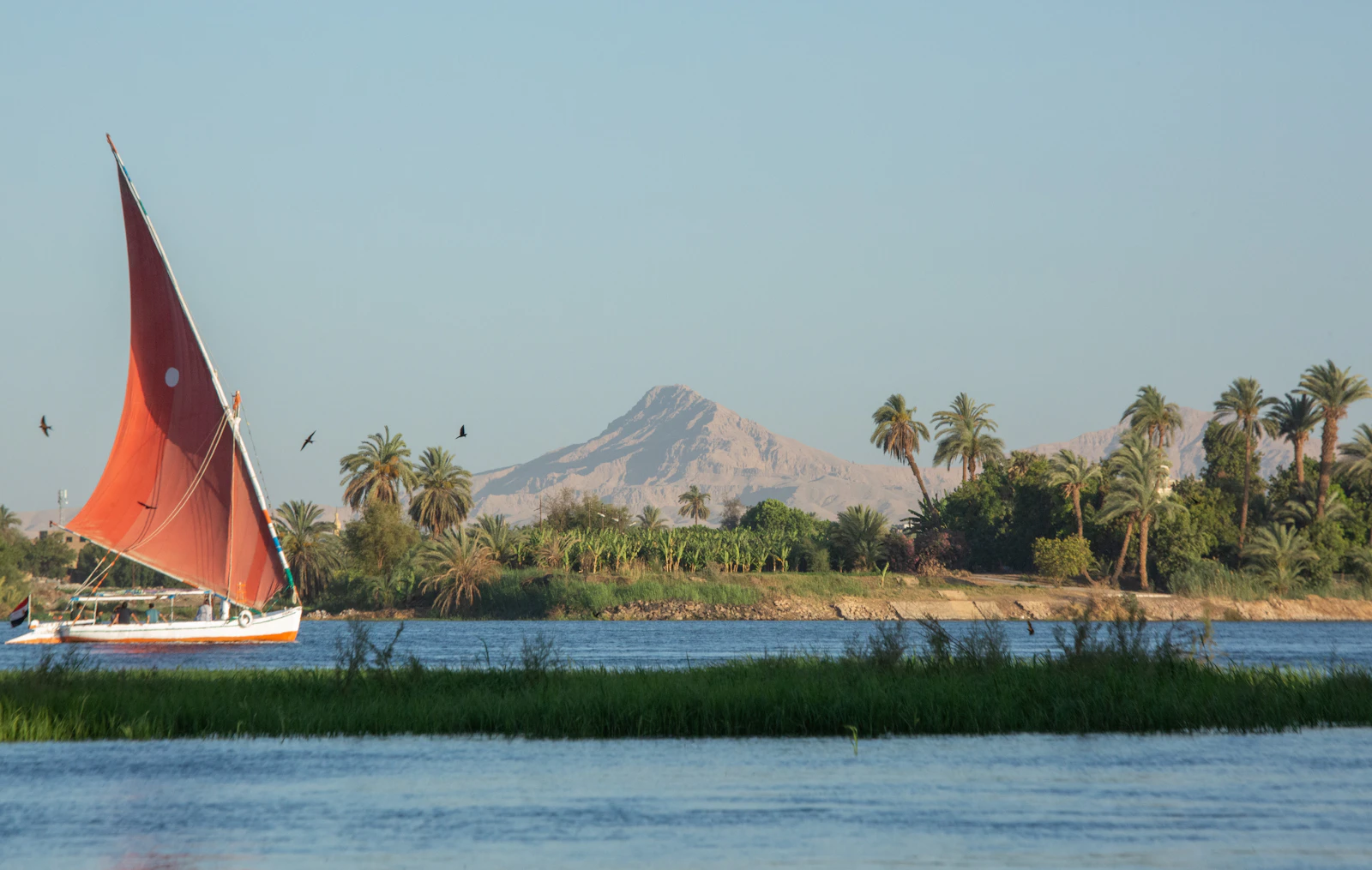
On this page
- Nile cruise vs felucca: the one decision behind every Nile itinerary
- What a Nile cruise actually gives you between Luxor and Aswan
- Felucca sailing from Luxor to Aswan: what a day on the water looks like
- Nile cruise length options and what each length actually buys you
- How many days on the Nile do you actually need?
- Luxor Aswan transfer options when the boat is only half the journey
- Nile cruise vs day trip: the river without a night on board
- Is a Nile cruise worth it? What the money actually buys
- Which is right for you: matching the boat to the trip you are booking
- Winter wind, summer heat: when to sail this river
- Frequently asked questions
Nile cruise or felucca: the cruise is a floating hotel with an engine, a cabin and guided temple visits handled for you, while the felucca is a small wind-powered sailboat with simple nights on deck and a schedule the wind sets. Choose the cruise for comfort and logistics, the felucca for closeness to the river.
Nile cruise vs felucca: the one decision behind every Nile itinerary
Most Nile itineraries turn on one segment: the stretch of river between Luxor in the south and Aswan in the north. How you get from Luxor to Aswan by boat sets the tone for the whole trip, so it is worth separating the three vessels on this water before comparing dates or cabin prices.
A Nile cruise ship is the floating-hotel end of the scale. A dahabeya is the traditional middle path: a two-sail wooden boat with real cabins and a handful of passengers. A felucca is the purest form, and the list below is what actually separates them on the water.
- Nile cruise ship — an engine, a private cabin with air conditioning, meals on board, and a published itinerary that moors at the same temple towns day after day. The ship runs the schedule.
- Dahabeya — a lateen-sail boat sized for a small group, with cabins, a proper bathroom and enough engine support to keep a timetable when the wind drops. The crew negotiates the schedule.
- Felucca — an open lateen-rigged sailboat with no cabin, shade cloth, cushions or mattresses, and a crew who reads the wind before anything else. The weather sets the schedule.
The temple route does not change with the vessel; both banks hold the same monuments whichever boat you choose. What changes is who controls the hours between the moorings and how much of the river you feel under you.
A second variable sits underneath the choice: direction. The same boat feels different under sail going upriver than it does riding the current downriver, and most itineraries run one way between the two cities in whichever direction the schedule and the wind favor. The booking conversation ends up the same for all three boats: what is included, which nights are spent on the water, and how you reach the mooring and leave it.
What a Nile cruise actually gives you between Luxor and Aswan
A Nile cruise takes the logistics off your hands: for three or four nights your hotel, your transport and your temple visits all travel together down the same river.
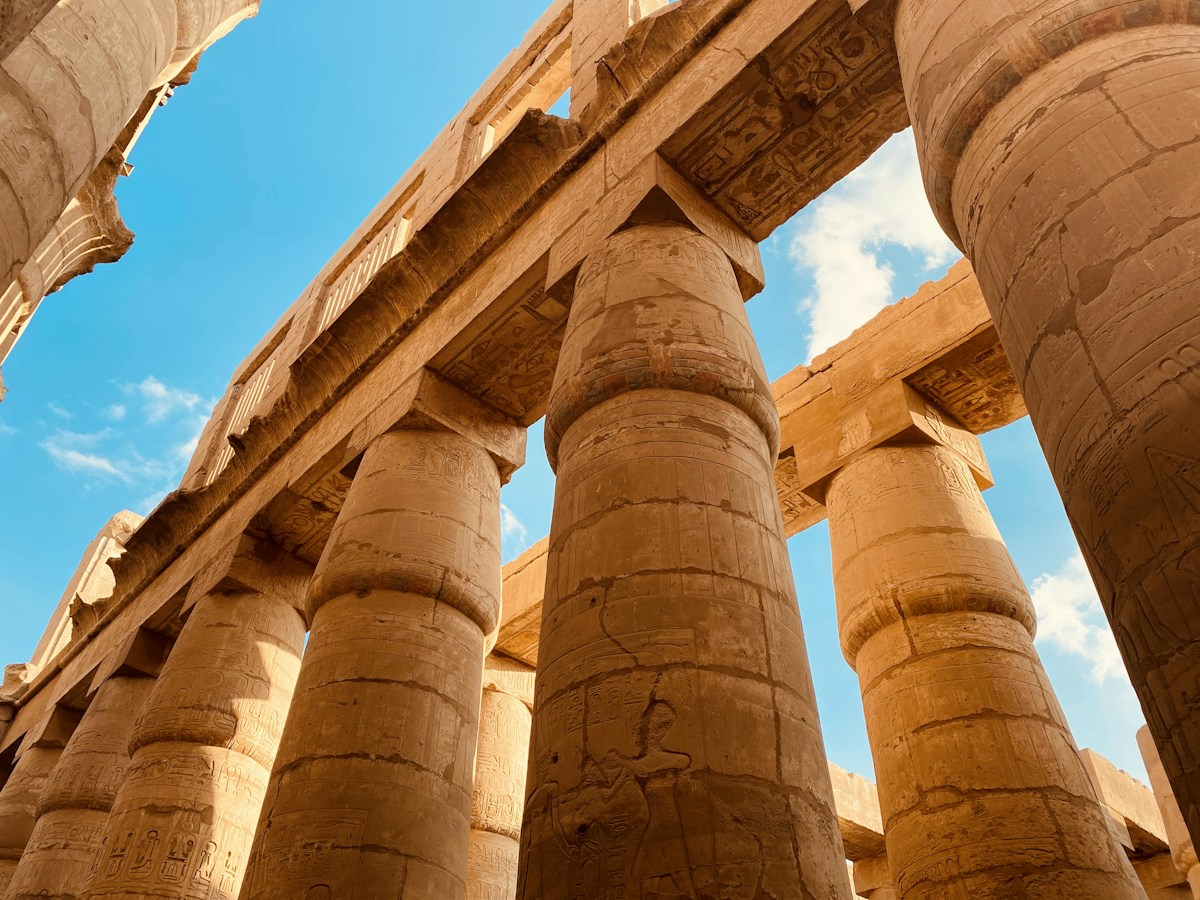
Departures run in both directions, so the same temples fall on the outbound leg or the return depending on the program; the corridor is short enough that even the shortest sailing covers it without a rushed day. From the Luxor moorings the included days usually cover both banks of the city — Karnak and its hall of columns on the east side, the royal tombs of the Valley of the Kings in the hills across the water. The Luxor city page sets out what sits on each bank. Downstream the ship moors at Edfu, where the Temple of Horus stands among the most complete in the country, and at Kom Ombo, the doubled temple shared by two deities on the river bend. Guides, transfers and entry handling are the point of the format: you step off, you are walked through, you step back on.
At the Aswan end the programs commonly add the granite quarries and the island temples near the city, and the long add-on is Abu Simbel — the cliff temples near the southern border, cut apart and lifted above Lake Nasser in a landmark salvage operation, reached as a dawn-to-dusk road day or as a lake extension. Evenings on board are quiet: dinner, and on some of the larger ships a music or dance show, with the river dark outside the window. What to re-check before you book: which tombs are open on your dates, what the entry-level cabin includes, and how optional excursions are priced. Entry rules and program details move season to season.
Felucca sailing from Luxor to Aswan: what a day on the water looks like
Felucca sailing between Luxor and Aswan is a slower, simpler version of the same river: you travel by wind, tie up where the crew chooses, and let the weather write the timetable.
The rhythm repeats most days. A start while the air is cool, sails up while the north wind pushes the boat upriver — the direction a lateen rig handles best — a long lunch in the shade of the small deck, and swimming off the boat where the current allows it. The classic bookable form is multi-day felucca sailing Luxor Aswan, crewed and provisioned for the nights in between. Downwind legs are sailed with the boom swung out or made under a short motor run, so the boat keeps making distance even when the wind shifts. There is no nightly program, no dress code and no harbor schedule; evenings are ashore in a riverside village or on deck under more stars than any city trip will show you. The afternoon often brings a second sailing, when the heat drops and the light off the west-bank hills is the reason people choose this boat in the first place.
The water itself explains why this works. South of Aswan the Aswan High Dam closed the cataracts and raised Lake Nasser, and the river between Luxor and Aswan became the broad, calm, island-dotted channel you sail today — the same channel the felucca has worked for centuries. Provisions, water and power are simpler than on a ship, so multi-day sails tie up at villages rather than quays, and the crew refills along the route. Shorter hops out of Aswan round the islands near the city. The honest trade: you gain the river and lose the cabin. What to re-check: wind forecasts for your week and the crew's weather policy before you commit to a sailing day.
Nile cruise length options and what each length actually buys you
Almost every bookable Nile cruise length is a variation on three, four or seven nights between Luxor and Aswan, and each rung of that ladder buys something specific — and costs something else.
- Three nights — the standard river leg. The booking most people mean by a 3 day Nile cruise: embark at one end of the corridor, moor at Edfu and Kom Ombo, walk the temples at the other end, disembark. You get the full corridor once and nothing beyond it.
- Four nights — the same route with slack. One extra night buys a slower pace through the temples, room for a weather-delayed embarkation, and, on some programs, the Abu Simbel day without a dawn-to-dusk push on the same legs as a transfer day.
- Seven nights — the river as the trip itself. Longer programs and round-trip sailings out of Luxor add stretches and second visits most itineraries skip. Worth it when the boat is the reason you came; less so when the temples are a checklist and Cairo is waiting.
Shorter runs mean more hotel changes per trip day; longer runs mean fewer other destinations in the same holiday. Direction changes the arithmetic as well: sailing with the wind upriver is the easier week aboard, while southbound programs lean harder on the engine. Either way the temple set is the same, so pick the length by how many spare days the trip can absorb, not by a fear of missing sites — the three-night leg already covers the corridor in full. River products run to fixed embarkation days in both directions, so the sailing calendar, not the temple list, usually decides your travel dates. Re-check current schedules and what each cabin category includes — inclusions differ between operators and seasons.
How many days on the Nile do you actually need?
Four to five days is enough to sail the temple stretch once, keep a full day for Aswan, and add one signature experience; three days is the floor, and a week only pays off when the boat itself is the destination.
- Three or four days on the river — one leg of the corridor plus a single bank of Luxor. Doable, but you are choosing between Karnak and the Valley of the Kings rather than visiting both.
- Five to seven days — the classic shape: the full cruise or a multi-day felucca, a morning on the Luxor west bank, a day in Aswan, and room for the Abu Simbel road day. A hot air balloon over the west bank at dawn fits in here; it is weather-dependent and cancels on wind.
- Eight days or more — the corridor plus a second destination: Cairo and the pyramids via the Cairo city page, or the Red Sea coast after the sailing ends.
This count is for the river corridor itself. How long to base yourself in Cairo or Alexandria is a different question with its own arithmetic — the mistake is carrying city day-counts onto the boat, or the reverse. Count the transfer days explicitly: arriving in Luxor the night before an early embarkation, and getting from Aswan to your next destination, draw on the same budget of days as the sailing itself. A balloon flight or the Abu Simbel road day each claims a full slot — a five-day plan holds either comfortably, and a seven-day plan can hold both. The variable that moves the number most is not the temples; it is how many river nights you actually want between them.
Luxor Aswan transfer options when the boat is only half the journey
When cruise dates or cabin categories do not line up with your itinerary, the corridor is easy to cross without sleeping on the river at all — and the land crossing doubles as the return leg for one-way sailings.
None of these crossings needs the boat, and mixing them is normal: a train one way and a short sail back is a common shape for a trip that wants both versions of the river.
- The train. Scheduled service runs between the two cities in both directions, with seated and sleeper classes. It is the cheapest scheduled option and the easiest to combine with a one-way cruise: sail in one direction, ride back in air-conditioned quiet. Timetables shift season to season — check current departures.
- The coach. Frequent, the slowest of the scheduled options, and the lowest band of the land prices. Fine when the transfer day is already in your plan and no other day is.
- A private transfer or driver. Door to door in roughly half a day, with the freedom to stop — the road passes within reach of Edfu and the Kom Ombo temple approach if you build the stops in.
- The domestic flight. The shortest version of the crossing and the one that protects your remaining days; schedules are thinner than the train's, so it rewards fixed plans.
- Boat one way, land the other. The combination most itineraries actually use: cruise or sail in the direction the wind favors, then train or fly back. It is how you get both the river and a workable departure.
Pick the constraint first — days, budget, or comfort — and the list picks itself. Whichever you take, book any connection the sailing depends on with margin: embarkations run to their own calendar and do not wait for delayed trains.
Nile cruise vs day trip: the river without a night on board
Seen up close, the trade is nights on the water against one afternoon of wind and light — and the day trip wins more often than the comparison pages admit.
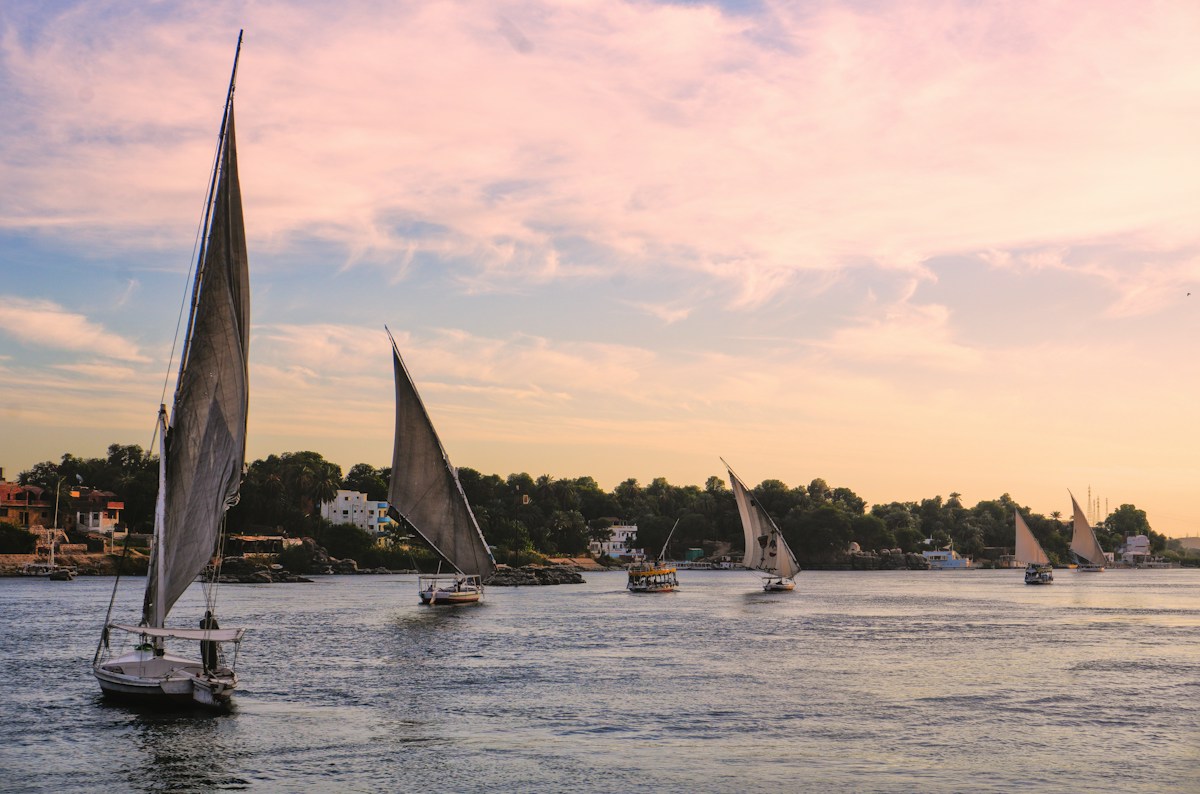
Out of Aswan the shared afternoon sail is the standard version: a few hours between the islands, the lateen rig up, a swimming stop if the wind allows, back before dinner. It is the cheapest way onto this river and needs little more planning than showing up in town. Out of Luxor the short sail runs to the west bank islands and the palm strips downstream of the temples — an hour or two that pairs well with a morning among the tombs and costs you no overnight. It also suits travellers who base themselves in one city: an afternoon sail from Aswan pairs with a hotel on the islands, and a short Luxor sail pairs with a west-bank tomb day in the same 24 hours.
What the day trip does not do is replace the corridor. You will not reach Edfu and Kom Ombo from an Aswan afternoon, and no lunch sail from Luxor delivers you to Aswan. You also lose the overnight rhythm entirely: the dawn light on the water, the new mooring after sleep, the slow hours that people mean when they say the river changed the trip. The honest positioning: a day trip is a taste and a photograph, a cruise or a multi-day sail is a way of traveling. If the taste is enough — a tight schedule, a fixed hotel on land, a first visit before committing — book the day trip and spend the saved nights somewhere else. Shared sails leave on the wind as much as on the clock, so ask for the latest realistic return time when you book.
Is a Nile cruise worth it? What the money actually buys
It is worth it when you value included logistics and a cabin over flexibility, and it stops being worth it the moment you would rather spend those nights in a good hotel on land.
The cruise occupies the widest price band on this river: entry-level cabins on older ships at one end, suites on newer builds at the other, priced per person and falling with occupancy. A shared day sail sits in the lowest band of anything afloat here, a multi-day felucca in the middle, a private dahabeya at the premium end. What moves a cruise price: cabin category, direction and length of the sailing, the season — the cooler months and the holiday weeks sit at the top of the band — and whether guided visits and meals are inside the fare.
The alternatives price the same way. A felucca day sail sits low because it is a few hours of boat and crew; a dahabeya sits high because it is effectively a small floating hotel with one sail. On many programs a solo traveller feels the difference most in cabins, which are priced per room, and least on shared felucca decks. What you are buying with a cruise is continuity: the boat replaces a hotel change, a transfer and a set of ticketed visits with one price and one moving room. That premium is worth paying on a first visit with limited days; it is easier to skip when you already hold good rooms in Luxor and Aswan and simply want the river. Before you book, re-check the current season surcharges, what the entry-level cabin really includes, cancellation terms, and whether temple tickets and guides are in the price. All of these move between seasons and operators.
Which is right for you: matching the boat to the trip you are booking
Few travellers regret either boat; most regret the mismatch between the boat and the trip built around it. Match the vessel to your constraint, not to the brochure. The list below is the version most itineraries end up choosing once dates, budget and comfort are put on the table.
- First visit, limited days — the cruise ship. The corridor once, temples handled, no hotel changes. A ten-day classic Egypt itinerary built around a five-star Nile cruise is the shape this takes.
- Repeat visitors and slow travellers — the multi-day felucca. The same river at village pace, nights wherever the boat ties up. A nine-day tour built around a felucca sailing leg runs this format end to end.
- Couples wanting quiet and a cabin without a ship's scale — the dahabeya, which traded the ship's facilities for a smaller deck and quieter moorings.
- Families with young children — the cruise ship's cabin and fixed routine usually win the vote; the felucca details in the questions below are why.
- Travelling solo — shared felucca sails and the entry cabins of cruise ships are the two formats that do not price a private room into the fare; a dahabeya is effectively chartered.
- Budget-first travellers — day sails plus the train. You skip the floating nights and keep the river.
- Want both in one trip — multi-day programs that pair a sailing leg with land days, including the felucca-and-Red-Sea combination of a ten-day Egypt explorer.
Everything outside the corridor — the pyramids, the coast, the desert — sits under the wider Egypt destination page. Keep the booking inside the sailing calendar: the right boat on the wrong week is the wrong boat.
Winter wind, summer heat: when to sail this river
Winter into early spring is both the best sailing window and the busiest stretch on this river, because the reliable north wind that fills a felucca's sail lands on top of the holiday calendar.
In those cooler months the wind is strongest and most dependable — the direction that carries a lateen rig upriver — and deck evenings are comfortable on both vessel types. Demand is at its peak in the same weeks, so cabins and overnight felucca berths go early. Late spring and autumn are the shoulder: calmer wind on some weeks, thinner crowds at the temple gates, and land days that stay walkable. Shoulder weeks are the value play for both boats: wind is usually adequate, the temples are quieter, and cabins sit lower in their band. Summer still runs every format, but the heat changes the shape of a day — feluccas start early and drift into the shade by mid-afternoon, and open-deck hours on a cruise ship shorten.
The wind is also the variable that cancels things. Balloon flights over the Luxor west bank, open-water sailing hours and day trips all run at the weather's discretion in every season, not only in winter. Holiday weeks and the local calendar move each year and reshape demand on the river, so check which dates fall inside your trip before assuming a quiet week. Re-check the sailing calendar for your exact weeks and ask each operator's weather policy before paying extra for wind-dependent experiences. Peak-week pricing should be confirmed in the same conversation.
Frequently asked questions
Can you sleep on a felucca overnight?
Yes — multi-day felucca trips sleep on deck. After dinner the crew lays out mattresses and blankets, and they are stowed again at dawn. There are no private cabins; the boat ties up at the bank or against a quiet island for the night. If you want a bed with walls around it, that is exactly what a dahabeya or a cruise ship adds.
Do feluccas have toilets or air conditioning?
No air conditioning, by design: a felucca is an open deck, and the river breeze under a shade awning is the cooling system. Toilet arrangements vary from a simple basic facility on board to ashore stops on shorter sails, so confirm the setup when you book. Cabins, proper bathrooms and AC are the features the dahabeya and the cruise ship are there to provide.
Can you see the major temples from a felucca?
You sail the same corridor, but the temples are visited from shore. Karnak and the Valley of the Kings need a day based in Luxor whichever boat you choose, and Edfu and Kom Ombo are reached by a short transfer from the towns beside their moorings. A felucca delivers you to the region at water level; the visits themselves you arrange, often with the crew's help.
Can I combine a Nile cruise and a felucca in one trip?
Yes, and many itineraries do: sail one direction by cruise or dahabeya, take the train or a flight back, and add a felucca day sail in Aswan for the wind-powered version. Some multi-day tours pair both legs directly. The constraint is the sailing calendar rather than availability — river legs run to fixed embarkation days, so build the trip around them.
Can families with young children take a felucca trip?
Yes for a short day sail, with preparation: the deck is hard and shade is limited, swimming stops need confident swimmers or close supervision, and there is little to occupy small children between the sails. Overnight trips ask more of a family than of two adults. Confirm what safety equipment the boat carries and what its weather policy is before you step aboard.
How far in advance should I book a Nile cruise or a felucca?
Cruise cabins in the cooler months and around the holidays sell by category first, so the entry-level tiers go earliest — book those weeks with real lead time. A shared day sail in Aswan can often be arranged the day before or the same morning; overnight feluccas and dahabeyas hold only a handful of beds and need the same planning window as a cruise.