 Lilshira


Explora Bután, Nepal y Tíbet en 14 días: de Paro a Lhasa
Cancelación gratuita
Hasta 24 horas de antelación para un reembolso completo.
Entrada móvil
Usa tu teléfono para entrar a tu destino.
Idioma del guía
Inglés, español
Tamaño del grupo
Máximo 12 personas
Descripción
Con una calificación de 4.9 sobre 5, el tour ofrece una combinación de visitas guiadas y momentos personalizados, lo que permite adaptar la experiencia a diferentes intereses. El precio incluye alojamiento, la mayoría de los traslados internos y varias comidas, mientras que los gastos de visa y vuelos internacionales se gestionan por separado. Es una opción adecuada para viajeros de todas las edades que desean conocer la riqueza cultural de la región en un formato de grupo parcialmente guiado.
Itinerario
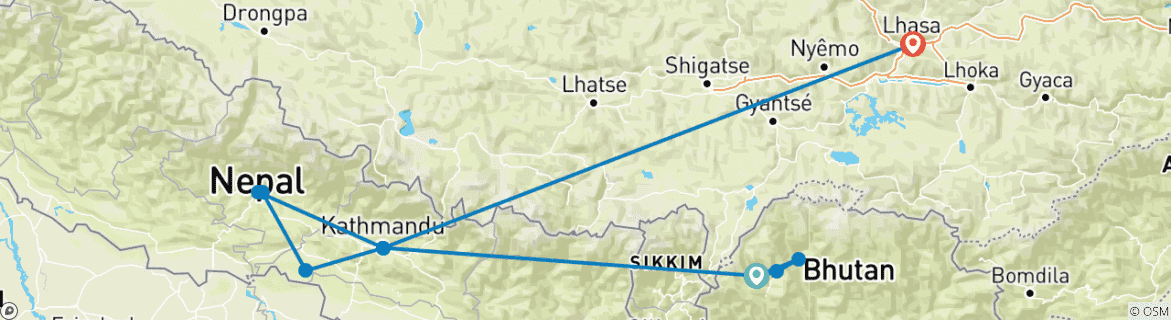
Día 1 – Llegada a Paro (Bután)
Visita al Rinpung Dzong, al Kichu Lhakhang y al Drugyal Dzong.
Días 2‑3 – Paro‑Thimphu‑Punakha
Caminata al monasterio Taktsang (Nido del Tigre) con almuerzo en restaurante de montaña; parada para té en el paso Dochu La; visita al Punakha Dzong y al Chimi Lhakhang.
Días 4‑5 – Kathmandu (Nepal)
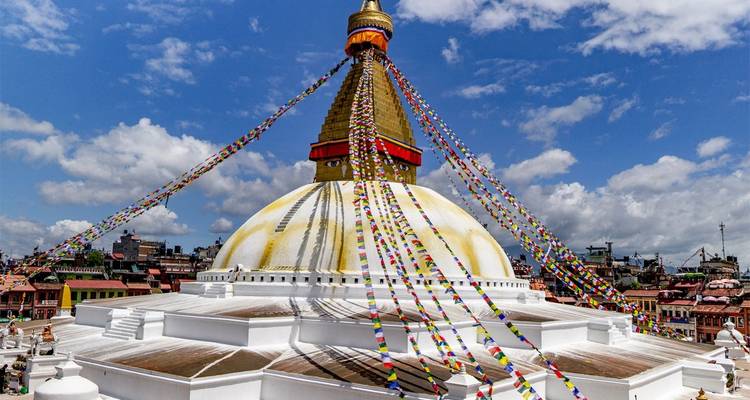
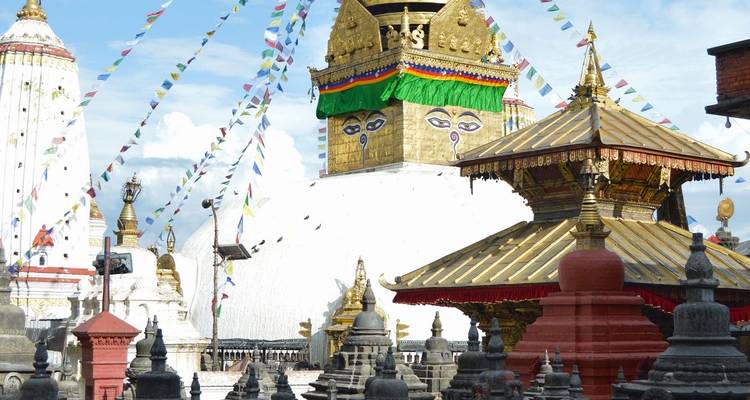
Recorrido por la Plaza Durbar, el templo Pashupatinath y la estupa Boudhanath.
Días 6‑8 – Chitwan y Pokhara
Safari en elefante, presentación de la flora y fauna del Parque Nacional Chitwan, paseo en canoa por el río Rapti, visita a las cataratas Davis y la cueva Shiva; en Pokhara, amanecer en Sarangkot, paseo en barco por el lago Phewa y visita al templo Bindyabasini.
Días 9‑14 – Lhasa (Tíbet)
Visita al Palacio Potala, al Norbulingka, al Museo del Tíbet, a los monasterios Drepung y Sera, al templo Jokhang, al bazar Barkhor, al monasterio Ganden y a la cueva Drayerpa, antes de la salida.
Punto de encuentro
Incluido
- task_alt Guide
- task_alt Additional Services
Excluido
- close Gastos personales
- close Propinas y gratificaciones
- close Extras opcionales
- close Seguro de viaje
Preguntas frecuentes
What is included in the $6,999 price for the Bhutan, Nepal and Tibet Tour?
The price covers accommodation in mid‑range hotels, daily breakfast plus selected lunches and dinners as listed in the itinerary, all ground transportation and scheduled domestic flights, entrance fees to the listed monuments and parks, an English‑speaking guide for the entire trip, and the additional services noted in the program. Personal expenses, optional activities not mentioned, and international flights to the start point are not included.
Are international flights between the countries covered in the tour price?
International flights are not part of the base price. The itinerary includes scheduled domestic flights (for example, Kathmandu to Lhasa) and all ground transfers, but travelers must arrange and pay for any flights needed to reach the starting city of Paro and to return from Lhasa to their home country.
Are there any additional fees not covered by the base price?
Yes. Extras such as personal souvenirs, optional excursions not listed, tips for guides and drivers, meals outside the program, and any required visas or travel insurance are paid by the traveler. Some high‑altitude permits or special entry tickets may also incur separate charges.
Can I pay for the tour in installments, and what are the payment deadlines?
The operator allows a two‑installment plan: a 30 % deposit is due when the booking is confirmed, and the remaining balance must be paid at least 30 days before the departure date. Specific payment instructions are provided in the booking confirmation email.
What is the cancellation and refund policy for this 14‑day tour?
Cancellations made more than 60 days before departure receive a full refund minus a processing fee. Between 60 and 30 days, 50 % of the total price is refunded. Cancellations within 30 days of departure are non‑refundable. The policy may be adjusted for force‑majeure events, and a written request is required for any refund.
Is travel insurance required or recommended for this itinerary?
Travel insurance is not mandatory but highly recommended. The tour passes through high‑altitude regions and includes activities such as hiking and an elephant safari, where medical coverage, evacuation, and trip interruption protection are advisable. Some visa authorities may request proof of insurance for entry into Tibet.
What is the daily departure time and meeting point for the first day in Paro?
On day 1, participants meet at 08:00 am in the lobby of the Paro hotel where the tour begins. After a brief welcome briefing, the group proceeds to the first site, Rinpung Dzong. The exact address is provided in the pre‑departure information packet.
How is luggage handled during the multi‑country transfers?
Luggage is transferred by the tour’s ground and air transport operators between hotels and airports. Travelers should pack a maximum of two suitcases (up to 23 kg each) and a personal day‑pack. A small fee may apply for excess weight or additional bags.
Are airport transfers included at the start in Paro and at the end in Lhasa?
Yes. The itinerary includes a private transfer from Paro International Airport to the first hotel on arrival, and a final transfer from the Lhasa airport to the departure lounge on the last day. Transfers to any internal airports are also covered.
How many days of free time are built into the itinerary for personal exploration?
The program includes two half‑day free‑time periods: one in Kathmandu after visiting the Durbar Square and another in Lhasa after the Barkhor Bazaar stroll. During these slots travelers may explore nearby markets, cafés, or rest at the hotel. No full free‑day is scheduled.
What visa requirements apply for Bhutan, Nepal and Tibet on this tour?
Separate visas are required for each country. Bhutan issues a tourist visa that is arranged by the tour operator on the traveler’s behalf. Nepal offers a visa on arrival for most nationalities, but a pre‑issued visa is also accepted. Tibet requires a Chinese travel permit and a Tibet‑specific entry permit, both of which the operator coordinates once the passport details are provided.
Which documents do I need to present to the guide for border crossings?
Travelers must carry a valid passport with at least six months remaining, printed copies of all visas and permits, the tour confirmation letter, and any required health certificates (e.g., COVID‑19 vaccination proof if applicable). The guide will verify these documents at each border checkpoint.
Is a specific type of travel insurance mandatory for entering Tibet?
While not legally mandatory, Chinese authorities often request proof of insurance that covers medical evacuation and repatriation for the duration of the Tibet leg. The tour operator advises purchasing a policy that meets these criteria to avoid entry delays.
Is the Bhutan, Nepal and Tibet Tour suitable for families with children aged 10 and up?
The tour is designed for families and includes activities that are appropriate for children ten years old and older, such as the hike to Tiger’s Nest (moderate difficulty), the elephant safari in Chitwan, and cultural visits. Parents should assess their child’s comfort with altitude and walking distances, especially in Lhasa and the high passes.
What fitness level is needed for the hike to Taktsang (Tiger’s Nest) and other activities?
A moderate fitness level is required. The hike to Taktsang involves a steady ascent of about 2 km with some steep sections, taking roughly 2‑3 hours. Other activities, such as the jungle safari and temple visits, are low‑impact. Travelers should be able to walk comfortably for several hours each day and manage altitudes up to 3,650 m in Lhasa.
Can senior travelers comfortably participate in the elephant safari and high‑altitude visits?
Senior travelers in good health generally find the itinerary manageable. The elephant safari is conducted at a gentle pace, and most temple visits involve limited walking. However, the high‑altitude locations (e.g., Lhasa, Tiger’s Nest) may cause mild altitude effects. It is advisable to consult a physician before booking and to consider a slower acclimatization schedule if needed.
Which cultural sites are visited in each country on this tour?
In Bhutan the group sees Rinpung Dzong, Kichu Lhakhang, Drugyal Dzong, Taktsang Monastery, Punakha Dzong, and Chimi Lhakhang. Nepal’s highlights include Kathmandu Durbar Square, Pashupatinath Temple, Boudhanath Stupa, Chitwan National Park (elephant safari and river canoe), Davis Falls, Shiva Cave, Sarangkot sunrise, Phewa Lake, and Bindyabasini Temple. In Tibet the itinerary covers Potala Palace, Norbulingka, Tibet Museum, Drepung and Sera Monasteries, Jokhang Temple, Barkhor Bazaar, Ganden Monastery, and Drayerpa Cave.
Will there be opportunities for free sightseeing in Kathmandu and Lhasa?
Yes. After the scheduled cultural visits, the itinerary provides a half‑day of free time in Kathmandu and another half‑day in Lhasa, allowing travelers to explore local markets, cafés, or additional sites at their own pace.
Is this tour a good choice for first‑time visitors to Bhutan, Nepal and Tibet?
For travelers who have never been to any of the three countries, the tour offers a structured introduction to the major cultural landmarks, natural scenery, and local customs while handling logistics such as visas, permits, and transfers. The guided format reduces language barriers and simplifies navigation, making it a practical option for first‑time visitors.
Which type of traveler gets the most value from the Bhutan, Nepal and Tibet Tour?
The tour delivers the highest value to culturally‑interested travelers who prefer a balanced mix of historic sites, natural experiences, and comfortable logistics. Families, small groups, and solo travelers who want an organized itinerary with an English‑speaking guide also benefit from the included services and reduced planning effort.
What should I prepare before joining this 14‑day multi‑country tour?
Prepare a valid passport, obtain the required visas and permits, arrange travel insurance, and pack layered clothing suitable for temperatures ranging from subtropical Kathmandu to high‑altitude Lhasa. Bring a reusable water bottle, basic first‑aid items, and any prescribed medication. It is also helpful to learn a few basic phrases in Dzongkha, Nepali, and Tibetan.
How does the cost of this guided tour compare with planning the same itinerary independently?
Booking the tour for $6,999 includes accommodation, most meals, transportation, entrance fees, and a professional guide, which individually could exceed the same amount when arranged separately, especially when accounting for visa processing, permits for Tibet, and internal flights. Independent planning may reduce the base price but often adds hidden costs and requires significant time for coordination.
Can I experience the main attractions without a guide, or is a guide essential for this tour?
While many of the attractions can be visited independently, a guide is essential for several reasons: obtaining permits for Tibet, navigating high‑altitude routes safely, accessing restricted sites such as Taktsang, and receiving cultural context that enriches the experience. The guide also handles logistics, allowing travelers to focus on sightseeing.
Is the Bhutan, Nepal and Tibet Tour worth the price for a family of four?
For a family of four, the tour spreads the cost of guide services, transportation, and entrance fees across all members, often resulting in a lower per‑person expense than arranging separate trips. The family‑friendly itinerary includes activities suitable for children, and the shared accommodation and meals can make budgeting simpler, which many families find to be good value.
También te puede interesar
Más tours en el mismo destino

Afghanistan
Safari terrestre de 57 días de Nairobi a Ciudad del Cabo
Afghanistan
Zanzibar to Cape Town – 40‑Day Cultural & Safari Expedition

Afghanistan
Bolivia to Brazil: 31‑Day Highlands & Coastlines Journey

Afghanistan
32‑Day India to Sri Lanka Journey: Pink City & Spice Gardens
Desde
$6,999 persona