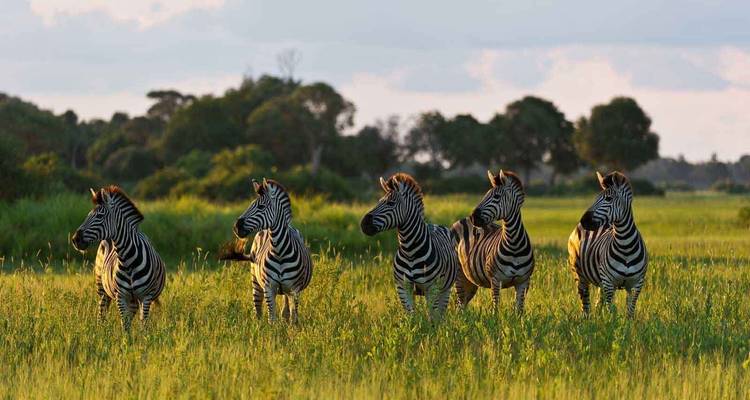
Botswana to introduce Starlink Mobile for remote safari connectivity
Botswana Tourism announced that Starlink Mobile will be deployed to provide mobile connectivity in remote safari zones, including the Okavango Delta and Chobe National Park. The rollout is expected to begin soon, targeting visitors and local stakeholders in these out‑of‑the‑way natural areas.
In this story
At a glance
- What changes
- Starlink Mobile will deliver mobile coverage in remote safari locations
- Timing
- Implementation is expected to start shortly after the announcement
- Who is affected
- Safari visitors, tour operators and local communities in remote parks
The details
- Announced by
- Botswana Tourism
- Previous rule
- Remote wildlife areas such as the Okavango Delta and Chobe National Park have limited or no mobile network coverage, relying on satellite phones or no service at all.
- New rule
- Starlink Mobile will be introduced to provide standard mobile connectivity in these remote zones, allowing visitors to maintain contact even where conventional cellular networks are absent.
Background and decision
Botswana Tourism explained that the country’s low population density makes traditional mobile tower construction financially unviable in many protected areas. With roughly 2.6 million residents spread over a vast land area, many remote locations lack any network service. To address this gap, the agency is pursuing a partnership with Starlink Mobile, a satellite‑based service that can reach places without ground infrastructure.
What Starlink Mobile will provide
Starlink Mobile uses low‑earth‑orbit satellites to deliver voice, data and messaging services. The technology is expected to work in the Okavango Delta, Chobe National Park and other far‑flung conservation zones. Tourists will be able to use regular smartphones for calls, navigation and emergency contact, while operators can improve logistics and safety communications.
- Standard 4G‑like coverage in areas previously without any signal
- Support for emergency services and wildlife monitoring
- Improved visitor experience through reliable internet access
Implementation timeline
The rollout will follow an initial feasibility study and the signing of a link agreement between Botswana Tourism and Starlink Mobile. Installation of ground terminals and user equipment is planned for the upcoming months, with service activation expected shortly thereafter. No specific launch date was disclosed in the announcement.
During the transition, existing satellite‑phone arrangements will remain available until the new service is fully operational.
What this means for travellers
Trip planning
- Visitors with upcoming safari bookings can expect mobile coverage once the service is live, improving safety and communication.
- Tour operators may promote the new connectivity as an added benefit when marketing trips to remote parks.
Cost and documents
- No new fees or documentation are required from travellers to benefit from the service.
- Existing travel insurance and visa requirements remain unchanged.
What you need to do
- Travellers should verify that their mobile devices are compatible with standard cellular networks once coverage begins.
- Operators are advised to inform guests about the upcoming connectivity and any device preparation steps.
Who this affects
-
Safari visitors to Okavango Delta
The area currently lacks conventional mobile coverage, which the new service will address.
What to do No specific action required; visitors can use regular phones once service starts.
-
Safari visitors to Chobe National Park
Chobe also suffers from limited network access, which Starlink Mobile will improve.
What to do No specific action required; standard mobile use will become possible.
-
Tour operators in remote parks
Operators rely on communication for safety, logistics and guest services in areas without towers.
What to do Prepare to integrate the new mobile service into operational plans and inform clients.
-
Local communities near protected areas
Improved connectivity can support local economies and emergency response.
What to do Monitor rollout announcements for any community‑level participation or support programs.
Frequently asked questions
When will Starlink Mobile be available in Botswana's safari areas?
The service is expected to be rolled out shortly after the announcement, but no exact launch date has been provided.
Will I need a special SIM card for Starlink Mobile in Botswana?
No special SIM is mentioned; the plan is to provide standard mobile coverage that works with regular cellular devices.
Does the new connectivity affect visa or entry requirements?
Visa and entry requirements remain unchanged; the connectivity upgrade does not introduce any new documentation.
Will the introduction of Starlink Mobile increase travel costs?
The announcement does not indicate any additional fees for travellers, so costs are expected to stay the same.
How will tour operators benefit from Starlink Mobile?
Operators will gain reliable communication for safety, logistics and guest services, allowing them to market improved connectivity as a feature of their tours.