


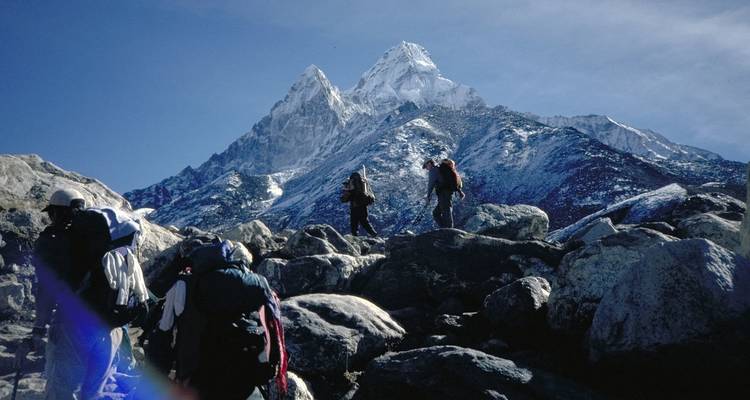
Ama Dablam Base Camp Trek
Free Cancellation
Up to 24 hours in advance for a full refund.
Mobile Ticketing
Use your phone for entry to your destination.
Guide Language
English
Group Size
1 - 9
Description
Itinerary
Kathmandu – Lukla – Phakding
Transfer to Ramechhap airport, fly to Lukla (30 min) and trek 8 km (≈3 h) to Phakding, crossing suspension bridges over the Dudh Koshi and visiting local villages.
Phakding – Namche Bazaar
Walk 10–12 km (≈6 h) through Sagarmatha National Park, passing Monjo and Sherpa villages such as Jorsale, before reaching Namche Bazaar.
Namche Bazaar – Viewpoint & Museums
Short hike to the Everest viewpoint and Sherpa Museum, then explore the Everest Photo Gallery and museum in the town.
Namche Bazaar – Tengboche
Trek 10–11 km (≈5 h) descending to the Dudh Koshi valley, cross the Imja Khola and visit Tengboche Monastery with its historic murals and statues.
Tengboche – Mingbo
Climb above Thyangboche through conifer forest to the tree line, pass Omega settlement and reach Mingbo after traversing summer yak pastures.
Mingbo – Ama Dablam Base Camp – Pangboche – Portes Tenga
Day‑trip to Ama Dablam Base Camp, return to Pangboche, then trek to Portes Tenga, exploring traditional villages and terraced fields.
Return to Kathmandu
Descend to Lukla, fly back to Kathmandu over forested hills, and transfer to the airport for departure.
Meeting Point

Included
- task_alt Accommodation
- task_alt Flights
- task_alt Guide
- task_alt Meals
- task_alt Additional Services
- task_alt Transport
Excluded
- close Additional Services
Frequently Asked Questions
What is included in the Ama Dablam Base Camp Trek price?
The tour price covers round‑trip domestic flights between Kathmandu and Lukla, all accommodation on the trek (tea houses and lodges), an English‑speaking guide, most meals (breakfast, lunch and dinner), ground transport for the trek, and additional services such as permits and internal transfers. Any personal gear, optional activities, tips, visa fees or travel insurance are not part of the base price.
Are international and domestic flights part of the tour cost?
Only the domestic flight from Kathmandu to Lukla and the return flight to Kathmandu are included in the tour price. International flights to and from Nepal are not covered and must be booked separately by the traveler.
Are there any optional or extra fees that are not covered by the tour price?
Yes. Extras may include personal trekking equipment, optional side‑excursions, tips for guides and porters, visa fees (if required), travel insurance, and any additional meals or drinks not listed in the itinerary. These costs are the responsibility of the participant.
What is the cancellation and refund policy for this trek?
The exact cancellation terms are not provided in the available data. Prospective guests should request the operator’s cancellation policy, which typically outlines deadlines for full or partial refunds and any non‑refundable deposits.
Is travel insurance required or recommended for the Ama Dablam Base Camp Trek?
Travel insurance is not listed as mandatory, but it is strongly recommended for high‑altitude trekking in Nepal. A policy that covers emergency evacuation, medical treatment, and trip interruption will protect you against unforeseen events.
Do I need a visa to travel to Nepal for this trek?
Visa requirements are not detailed in the tour data. Most nationalities need a tourist visa, which can be obtained on arrival at Tribhuvan International Airport or online in advance. Check the latest Nepal immigration guidelines for your citizenship.
What documents should I bring when entering Nepal for the trek?
You should carry a passport valid for at least six months, a printed visa (if obtained online) or be prepared to obtain one on arrival, proof of travel insurance, flight tickets, and any required permits. It is also wise to have a copy of your trek itinerary.
What is the typical daily itinerary start time and meeting point in Kathmandu?
The trek usually begins with an early morning briefing around 8:00 am at the hotel lobby where most participants stay. The guide will gather the group, review safety information, and escort travelers to the airport for the Lukla flight.
How much luggage can I bring on the internal flight to Lukla and on the trek?
Domestic flights to Lukla generally allow a checked bag of up to 15 kg and a personal item of about 7 kg. On the trek you will carry a day pack (20‑25 L) with essentials; the rest of your gear is transported by porters or carried in the checked bag.
Is airport transfer between Kathmandu airport and the trek’s starting point included?
The provided information does not list a Kathmandu airport transfer as part of the package. Travelers should arrange their own transport from the airport to their hotel or the meeting point, unless the operator confirms otherwise.
How many days before the trek should I arrive in Kathmandu to acclimatize?
It is advisable to arrive at least one to two days before the Lukla flight. This allows you to rest, adjust to the time zone, and begin mild altitude acclimatization, reducing the risk of acute mountain sickness.
What fitness level is required to complete the 12‑day Ama Dablam Base Camp Trek?
A moderate to high fitness level is recommended. Participants should be comfortable walking 5–6 hours per day on varied terrain, handling steep ascents, and coping with altitudes up to roughly 4,500 m. Prior trekking experience at altitude is beneficial but not mandatory.
Is the trek suitable for families with children, and what age is recommended?
Families are welcome, but children should generally be 12 years or older due to the altitude and daily walking distances. Younger children may find the high‑altitude environment challenging, so parental discretion and a medical check are advised.
Can senior travelers (60+) safely join this trek?
Senior travelers can participate if they are in good health, have prior trekking experience, and obtain medical clearance. The guided nature of the tour provides support, but the altitude and physical demands mean a realistic self‑assessment is essential.
Is the Ama Dablam Base Camp Trek appropriate for solo travelers?
Yes. The trek is conducted in a group, typically 8‑12 participants, with an English‑speaking guide. Solo travelers benefit from the camaraderie of the group, shared logistics, and the safety of a professional guide.
What are the main highlights and cultural sites visited on this trek?
Key highlights include the scenic flight to Lukla, crossing the Dudh Koshi suspension bridges, exploring Sherpa villages, visiting the Sherpa Museum and Everest View Hotel in Namche Bazaar, the historic Tengboche Monastery, trekking to Ama Dablam Base Camp, and panoramic views of the surrounding Himalayan peaks.
Will there be free time for personal exploration in Namche Bazaar or other villages?
The itinerary builds in short rests and optional free periods, especially in Namche Bazaar and larger settlements. Travelers can use this time to browse local markets, visit cafés, or take short side walks, though the schedule remains focused on the daily trekking distance.
What type of accommodation will I stay in during the trek?
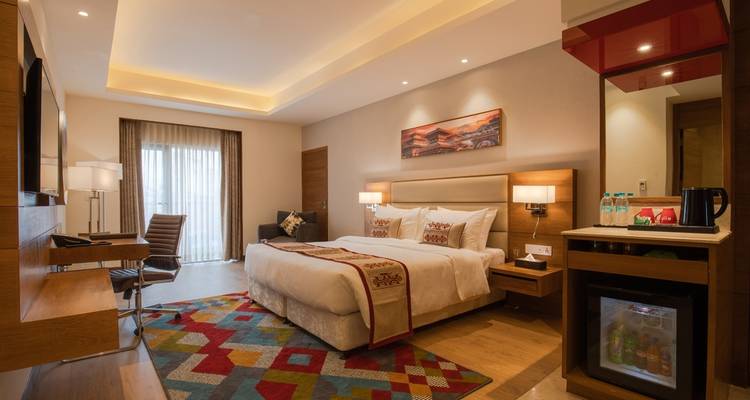
Accommodation consists of locally owned tea houses and lodges along the route. Rooms range from basic shared‑bath facilities to private rooms with attached bathrooms, depending on availability. All lodges provide meals as outlined in the itinerary.
Is Wi‑Fi or internet access available during the trek?
Wi‑Fi is limited. Larger villages such as Namche Bazaar often have cafés offering internet access, but remote sections, high passes, and the base‑camp area typically have no connectivity. Plan for periods without online service.
Is this trek a good value compared to organizing the same route independently?
Booking the guided trek bundles flights, permits, accommodation, a professional guide, and logistical support, which can be more expensive and time‑consuming to arrange separately. The package also adds safety and local expertise, often making it a cost‑effective option for most travelers.
Which type of traveler gets the most benefit from the Ama Dablam Base Camp Trek?
Active travelers seeking a structured high‑altitude experience, families with older children, and first‑time Himalayan trekkers who value safety, cultural immersion, and logistical convenience benefit most. The English‑speaking guide and group setting also suit solo adventurers.
What should I pack for the Ama Dablam Base Camp Trek?
Pack sturdy trekking boots, layered clothing (thermal base layer, fleece, waterproof shell), a warm hat, gloves, a sleeping bag rated to –10 °C, a 20‑25 L day pack, water bottle, sunscreen, sunglasses, personal medication, a small dry bag, and a reusable tote for toiletries. Adjust items based on personal needs and weather forecasts.
How does the guided experience improve safety on high‑altitude sections?
The English‑speaking guide monitors altitude, pace, and health, provides navigation on steep or poorly marked trails, and coordinates emergency response if needed. They also liaise with local porters and tea‑house owners, ensuring proper acclimatization stops and reliable support throughout remote sections.
You May Also Like
More tours in the same destination
Nepal
Everest High Passes & Island Peak – 25‑Day Trek in Nepal
Nepal
26‑Day Jiri to Everest Base Camp Trek – Himalayan Hiking Experience
Nepal
Explore Tilicho Lake & Thorung La Pass on a 21‑Day Himalayan Trek
Nepal
Langtang‑Helambu 19‑Day Trek from Kathmandu
From
Contact Us person