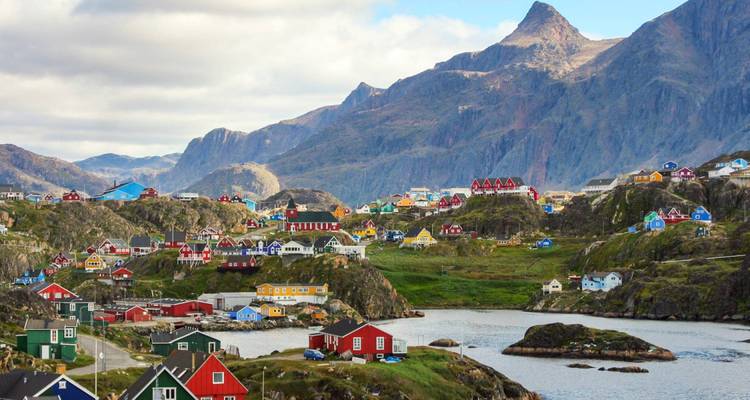
Greenland Coast

Explore Greenland

Discover Greenland’s Arctic scenery, vibrant towns, and essential travel details.

1 Tours
6 Guides
17 Cities
payments

Currency

Danish krone (DKK)

translate

Language

Greenlandic (Kalaallisut) and Danish

groups

Population

Approximately 56,000

passport

Visa

Schengen visa required for most non‑EU/EEA travelers; EU/EEA citizens visa‑free

security

Safety

Generally safe; low crime, but weather and remote conditions can pose risks

savings

Travel Cost

Moderate to high; flights and guided tours are expensive, accommodation varies

wb_sunny

Best Visit

June – September for milder weather and extended daylight

Greenland at a glance

Greenland, the world's largest island, offers a distinctive Arctic experience defined by its icy fjords, towering glaciers, and a handful of culturally rich towns. With a population of roughly 56,000, the country blends traditional Inuit heritage with Danish influences, reflected in its bilingual language use. Visitors benefit from a stable currency, the Danish krone, and a safety environment that is low in crime, though the remote landscape demands respect for weather and terrain.

Greenland view Greenland view

Map View

Explore Greenland on the map

Centered on the country’s main cities and scaled to keep the full destination in view.

place 17 Attractions public Google Maps style
search
Search area
Greenland
Country location
Greenland
Centred from 17 city points.
open_in_new Open in Google Maps

Greenland travel overview

The country is ideal for adventure‑focused journeys, wildlife observation, and cultural immersion. Summer months provide the most comfortable conditions for hiking, kayaking among icebergs, and exploring towns such as Nuuk, Ilulissat, and Qaqortoq. The unique combination of Arctic climate, accessible coastal settlements, and opportunities for guided tours makes Greenland a fitting destination for travelers seeking both natural wonder and authentic local experiences.

Greenland view Greenland view

Essential Travel Tips

Book Early

Popular routes and hotels fill quickly in peak season.

Mix Transport

Use trains between cities and local transit inside centers.

Stay Central

Base yourself near a walkable area to save time.

Cash Ready

Some small vendors still prefer cash for smaller purchases.

Pack Smart

Comfortable shoes matter more than anything else.

Frequently Asked Questions

What visa do I need to travel to Greenland? expand_more
Greenland follows Denmark’s Schengen rules. Citizens of EU/EEA countries can enter visa‑free, while travelers from most other nations need a Schengen visa. The visa must be obtained before arrival, typically through a Danish embassy or consulate. Always verify current requirements, as policies can change.
Which currency is used in Greenland and can I use credit cards? expand_more
The Danish krone (DKK) is the official currency. Credit and debit cards are widely accepted in larger towns such as Nuuk and Ilulissat, especially in hotels, restaurants, and tour operators. In remote settlements cash may be required, so it’s advisable to carry some kroner for small purchases.
What are the official language(s) spoken in Greenland? expand_more
Greenlandic, known as Kalaallisut, is the primary language, and Danish is also an official language. Most residents are bilingual, and English is commonly understood in tourist areas, hotels, and among guides, making basic communication straightforward for most visitors.
When is the optimal time to visit Greenland for good weather? expand_more
June through September offers the most favorable conditions, with milder temperatures ranging from 5 °C to 15 °C, extended daylight, and reduced sea ice. This period supports outdoor activities such as hiking, boat tours, and wildlife viewing while providing the longest daylight hours.
How much does a typical trip to Greenland cost? expand_more
Travel to Greenland is generally moderate to high in cost. International flights often connect via Copenhagen and can be expensive. Domestic flights, guided tours, and accommodation in remote areas add to the price. Budget travelers can find hostels and campgrounds, while mid‑range options include hotels and organized tours.
What are the main airports or entry points for international travelers? expand_more
International arrivals usually connect through Copenhagen Airport (CPH) to Kangerlussuaq Airport (SFJ), the primary hub for domestic flights. Additional airports serving regional traffic include Narsarsuaq (UAK) and Nuuk (GOH). From these points, travelers can reach other towns by plane or boat.
How can I travel between Greenland’s cities? expand_more
Domestic air travel is the most common method, with Air Greenland operating regular flights between major settlements. Coastal towns are also linked by passenger ferries during summer months. Overland travel is limited to a few gravel roads on the west coast; most journeys rely on air or sea transport.
What safety precautions should I take while traveling in Greenland? expand_more
While crime rates are low, the Arctic environment poses natural risks. Prepare for sudden weather changes, cold temperatures, and limited medical facilities in remote areas. Always inform someone of your itinerary, carry appropriate clothing, and consider guided tours for activities such as glacier hiking or iceberg navigation.
What climate should I expect during a summer visit? expand_more
Summer in Greenland is cool and relatively short. Average daytime temperatures range from 5 °C to 15 °C, with occasional warmer days near the coast. The season features long daylight hours, sometimes up to 24 hours of twilight, and reduced sea ice, creating favorable conditions for outdoor exploration.
Which cities are most popular for visitors? expand_more
Key destinations include Nuuk, the capital; Ilulissat, known for the UNESCO‑listed Icefjord; Sisimiut, the second‑largest town; Qaqortoq, noted for its colorful houses; and smaller settlements such as Tasiilaq, Uummannaq, and Narsaq. These towns provide access to cultural sites, natural landmarks, and local services.