 Lilshira


Explore Ghana’s Forts and Castles – 10‑Day Cultural Tour
Free Cancellation
Up to 24 hours in advance for a full refund.
Mobile Ticketing
Use your phone for entry to your destination.
Guide Language
English
Group Size
2 - 10
Description
The tour is conducted in English and is suitable for travelers aged 12 and up, making it appropriate for families and small groups interested in an active cultural experience. Accommodations, most meals, and transportation between sites are arranged by the operator, allowing participants to focus on the historic and natural highlights of the country. The price is €3,427 per person, and the tour runs year‑round, including the Christmas and New Year period.
Itinerary
Accra – City Highlights
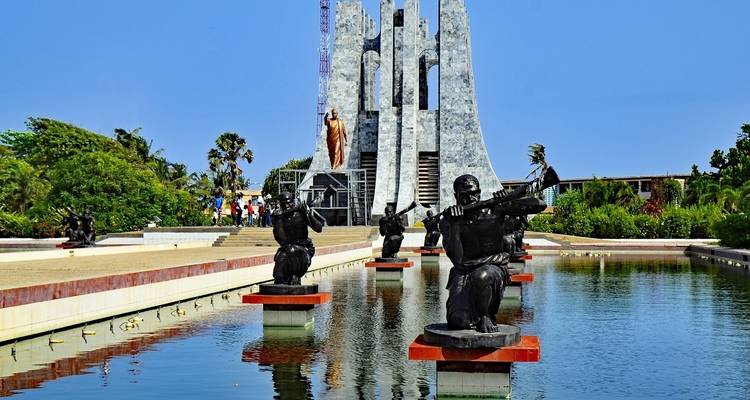
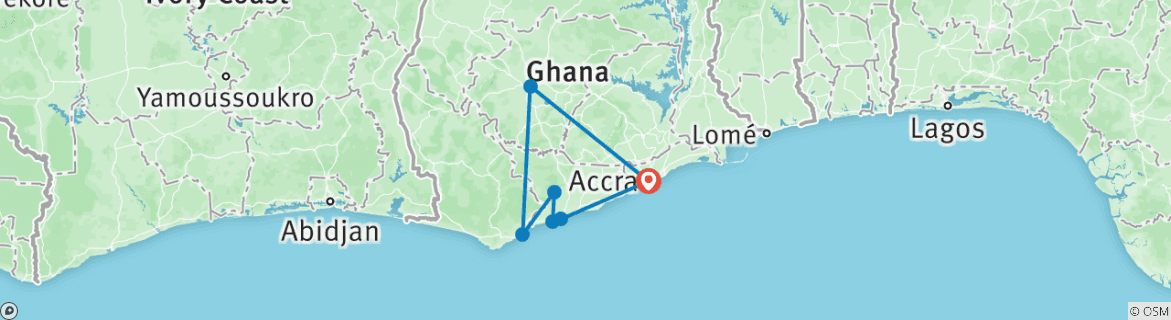
Guided tour of Accra’s key sites: W.E.B. Du Bois Center, Independence/Black Star Square, Kwame Nkrumah Memorial Park, and shopping at the Arts Centre.
Cape Coast & Elmina – Forts and History
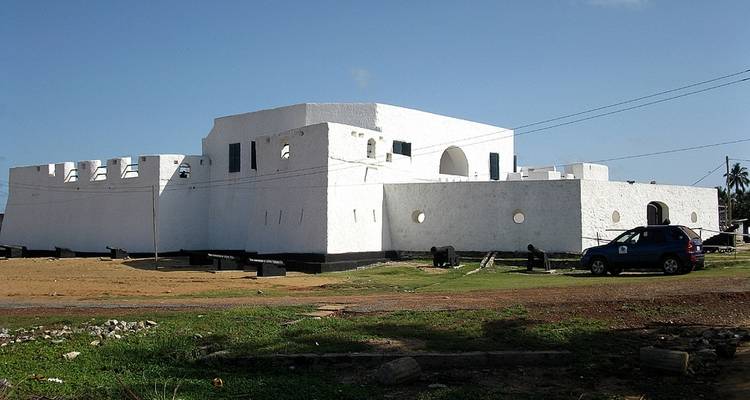
Visit Cape Coast Castle, explore the West African Historical Museum, and tour the historic Elmina Castle.
Kakum National Park & Fort St. Jago
Experience the rainforest canopy walk at Kakum National Park and visit the coastal Fort St. Jago.
Western Coast – Forts, Market & Woodcarvers
Stop at Fort St. Sebastian (Shama) and Fort Orange (Sekondi), browse Takoradi’s Market Circle, and explore a local woodcarvers’ village.
Beyin Area – Coastal Forts
Visit Fort Apollonia and Fort Metal Cross at Dixcove, showcasing Ghana’s maritime heritage.
Kumasi – Royal and Military Heritage
Tour Manhyia Palace Museum, Fort St. George/Military Museum, city monuments, the National Cultural Center, and Prempeh II Jubilee Museum.
Artisan Villages & Return to Accra
Explore Ahwiaa woodcarvers, Ntonso Adinkra, and Bonwire Kente weaving villages before traveling back to Accra, the tour’s end point.
Meeting Point
Included
- task_alt Guide
Excluded
- close Personal Expenses
- close Tips and Gratuities
- close Optional Add-ons
- close Travel Insurance
Frequently Asked Questions
What is included in the €3,427 price for the 10‑day Forts and Castles Tour in Ghana?
The €3,427 price covers accommodation in 3‑star hotels, daily breakfast, guided tours of all listed forts, castles and museums, transportation by air‑conditioned coach between sites, services of an English‑speaking guide, and entrance fees to the historic sites mentioned. It does not include international flights, personal expenses, optional activities, or gratuities.
Are international flights to Accra covered in the tour price?
International flights to Accra are not part of the €3,427 package. Travelers must book their own round‑trip airfare to Kotoka International Airport. The tour operator can provide a list of preferred airlines, but the cost of flights is paid separately by the participant.
Are there any extra fees that are not part of the tour price, such as entrance fees or tips?
The price includes entrance fees to the forts, castles and museums listed in the itinerary, as well as the guide’s services. Additional costs may arise for optional excursions not listed, personal souvenirs, meals not covered (e.g., lunches or dinners), tips for guide and driver, and any extra beverages. Participants should budget an extra €200‑€300 for these incidental expenses.
Can I pay for the tour in installments, and if so, what are the options?
The operator offers a two‑installment payment plan: 50 % of the total price is due at booking, and the remaining 50 % must be paid no later than 30 days before the start date. Some travel agencies may provide alternative schedules, but the standard option is the two‑payment split.
What is the cancellation and refund policy for this tour?
Cancellations made more than 60 days before the departure date receive a full refund minus a €150 administrative fee. Between 30‑60 days, 50 % of the total price is refundable. Cancellations within 30 days are non‑refundable, but the operator may offer a credit for a future tour at the same price.
What time does the first day of the tour start in Accra, and where do we meet the guide?
The exact start time is communicated in the pre‑departure briefing, but the tour typically begins in the morning, around 8:30 am, at the designated meeting point in the hotel lobby of the first night’s accommodation in Accra. Participants are advised to arrive at least 15 minutes early to receive travel documents and introductions.
Is airport transfer between Kotoka International Airport and the hotel included?
Airport transfers are not listed among the included services for this tour. Travelers should arrange their own transport between Kotoka International Airport and their first hotel in Accra, unless they confirm a private pick‑up with the operator during the booking process.
How much luggage am I allowed to bring on the coach during the tour?
The tour uses a standard coach with a typical luggage allowance of one large suitcase (up to 23 kg) and one personal item per passenger. Over‑weight or extra bags may incur an additional charge. For exact limits, guests should verify with the operator before departure.
How many days should I arrive before the start date, and can I extend my stay after the tour ends?
It is recommended to arrive at least one night before the first day to rest after the long flight and to attend the pre‑tour briefing. After the final day, most participants stay an additional night in Accra to catch their return flight, but extending the stay is possible at personal expense.
Do I need a visa to travel on this Ghana tour, and what documents are required?
Visa requirements depend on the traveller’s nationality. Many visitors need a tourist visa for Ghana, which can be obtained online through the e‑visa portal or at a Ghanaian embassy. Required documents usually include a valid passport, a recent passport‑photo, proof of accommodation and a return ticket. Check the latest regulations before booking.
Is travel insurance mandatory for participants, and does the tour provider recommend a specific type?
Travel insurance is not mandatory for this tour, but the operator strongly recommends a policy that covers medical emergencies, trip cancellation, and personal belongings. Some insurers also include evacuation coverage, which can be valuable in remote areas like Kakum National Park. Participants should provide proof of insurance if requested.
Is the tour suitable for solo travelers, and will I be placed in a mixed‑nationality group?
The tour is open to solo travelers and places them in a mixed‑nationality group of typically 12‑20 participants. An English‑speaking guide leads the group, ensuring that solo guests have the same access to activities, meals and accommodations as everyone else, and providing opportunities to meet fellow travelers.
Is the itinerary family‑friendly, and are activities appropriate for children over a certain age?
The itinerary is designed with families in mind. Accommodations are family‑friendly, and most sites, such as the forts and the canopy walkway, are suitable for children aged eight and older. Younger children may find some stairs challenging, but the guide can arrange assistance where possible.
What level of physical fitness is required for the visits to forts, castles and Kakum canopy walkway?
The tour requires moderate fitness: daily walking of 3‑5 km, occasional stairs at forts and museums, and a short walk on the Kakum canopy walkway (approximately 0.5 km with some ladders). Participants should be comfortable with moderate activity and be able to stand for several hours during guided tours.
Are seniors able to comfortably participate in all parts of the tour, including the canopy walk?
Seniors in good health can generally enjoy the full itinerary. However, some forts involve steep steps and the canopy walkway includes a ladder section that may be difficult for those with limited mobility. The guide can suggest alternative pacing or optional rest periods, but the tour is not wheelchair‑accessible.
Which historic sites are included in the Forts and Castles Tour, and are there any guided museum visits?
The tour visits Accra’s key sites (W.E.B. Du Bois Center, Independence Square, Kwame Nkrumah Memorial Park), the Cape Coast and Elmina Castles, Kakum National Park’s canopy walkway, Fort St. Jago, Fort St. Sebastian, Fort Orange, Fort Appolonia, Fort Metal Cross, Fort St. George, Manhyia Palace Museum, Kumasi’s cultural museums, Ahwiaa woodcarvers’ village, Ntonso Adinkra village and Bonwire Kente weaving village. All museum entries are guided.
Will there be free time for personal exploration in Accra, Kumasi or at the beaches?
The schedule includes built‑in free periods, typically early mornings or late afternoons, allowing travelers to explore Accra’s markets, Kumasi’s streets or the beach at Busua on their own. The guide provides suggestions for optional activities, but participation is not mandatory.
What is considered the highlight of the 10‑day Forts and Castles Tour in Ghana?
Many participants consider the combined experience of touring the historic Cape Coast and Elmina Castles together with the canopy walk in Kakum National Park as the highlight. This pairing offers a deep look at Ghana’s colonial history and its natural rainforest environment in a single day.
Is this tour a good choice for first‑time visitors to Ghana?
Yes, this tour is well suited for first‑time visitors to Ghana. It covers the country’s most important historical sites, provides a knowledgeable English‑speaking guide, and balances cultural immersion with comfortable accommodations, making it an efficient way to see the major attractions without having to arrange logistics independently.
Which type of traveler gets the most value from the Forts and Castles Tour—history buffs, families, or adventure seekers?
History enthusiasts, families with older children, and travelers who enjoy moderate activity gain the most value. The tour’s focus on forts, castles and museums appeals to those interested in colonial history, while the inclusion of craft villages and a canopy walk adds cultural and adventure elements that families and active travelers appreciate.
What should I prepare before joining this tour, such as vaccinations, clothing, or currency?
Before joining, ensure you have a valid passport with at least six months’ validity, obtain any recommended vaccinations (e.g., yellow fever), bring lightweight breathable clothing, a hat, sunscreen, insect repellent, and a small amount of Ghanaian cedi for tips and small purchases. A travel adapter for UK‑type plugs is also useful.
What is the difference between this guided tour and planning the trip independently in terms of cost and effort?
Planning a similar 10‑day itinerary independently would require arranging accommodation, transport, guide fees, and entrance tickets separately, which often results in higher total costs and more time spent on logistics. The guided tour bundles these elements at €3,427, offering a predictable budget and the expertise of a local guide, which can be more cost‑effective for most travelers.
Can I explore Ghana’s colonial forts and castles on my own, or is a guided tour essential for access and context?
While it is possible to visit some forts and castles on your own, many sites have limited opening hours, require guided entry for detailed interpretation, and have entrance fees that are easier to manage through a tour operator. A guided tour also provides historical context and ensures safe travel between remote locations, making it a more convenient option for most visitors.
Is Wi‑Fi available on the coach or at the hotels during the tour?
The tour operator does not list Wi‑Fi as an included service. Some hotels in Accra and Kumasi provide complimentary Wi‑Fi in public areas, and the coach may have limited satellite connectivity, but reliable internet cannot be guaranteed throughout the journey. Travelers should plan for occasional offline periods.
Are dietary restrictions like vegetarian or halal meals accommodated during the tour?
The operator states that special dietary requirements can be accommodated where possible, but the exact menu depends on the hotels and restaurants used. Guests should notify the tour coordinator of vegetarian, vegan, halal or other restrictions at the time of booking so that the team can make appropriate arrangements.
From
$3,427 person