


Historical Empires in the Far East
Free Cancellation
Up to 24 hours in advance for a full refund.
Mobile Ticketing
Use your phone for entry to your destination.
Guide Language
German
Group Size
4 - 38
Description
Itinerary
Arrival in Seoul and welcome dinner
Fly from Germany to Seoul, transfer to the city, and travel to Gyeongju for a welcome dinner.
Suwon, Songnisan and Beopjusa
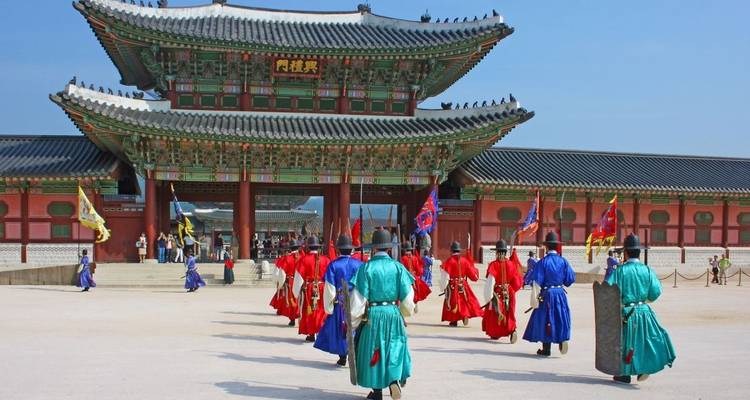
Visit Hwaseong Fortress in Suwon, explore Songnisan National Park, and see the Cheongdongmireukbul Buddha at Beopjusa Temple.
Gyeongju UNESCO heritage sites
Tour Seokguram Grotto and Bulguksa Temple, explore the royal tombs at Tumuli Park, stroll around Anapji Pond, and visit the Gyeongju National Museum.
Busan coastal and market highlights
See Haedong Yonggungsa Temple on the sea, visit Yongdusan Park’s observation tower, browse Jagalchi Fish Market, and wander the colorful Gamcheon Village.
Seoul city tour and travel to Kyoto
Discover Dongdaemun Design Plaza, walk along Cheonggyecheon River, visit Seoul Plaza, Deoksugung Palace grounds, and the War Memorial of Korea before taking a train to Seoul and a flight to Kyoto.
Kyoto and Nara temple circuit
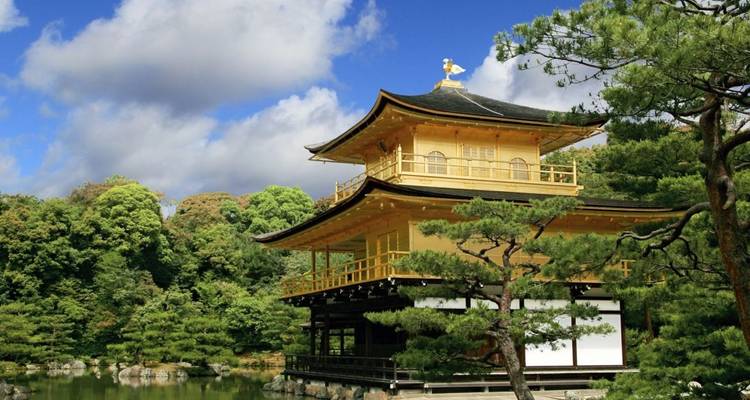
Explore Kyoto’s Imperial Palace, Kinkaku‑ji (Golden Pavilion), a Zen garden, and Fushimi Inari’s torii gates, then day‑trip to Nara to see Nara Park, the Daibutsu at Tōdai‑ji, and Kasuga Shrine.
Takayama, Matsumoto and Fuji‑Hakone
Visit Takayama’s morning market and historic old town, tour Matsumoto Castle, and relax in an onsen in the Fuji‑Hakone region.
Tokyo city tour and farewell
Tour Meiji Memorial, Harajuku, Omotesando, Shinjuku’s city hall, Kannon Temple in Asakusa and Nakamise‑dōri shopping street, enjoy a farewell dinner, then depart for Germany.
Meeting Point

Included
- task_alt Accommodation
- task_alt International Flights
- task_alt Guide
- task_alt Meals
- task_alt Additional Services
- task_alt Transport
Excluded
- close Additional Services
Frequently Asked Questions
What is included in the price of the Historical Empires in the Far East tour?
The tour price covers international flights from Germany to Seoul and from Tokyo back to Germany, all ground transportation by coach or bus, accommodation in the hotels listed in the itinerary, a German‑speaking guide for the entire 14‑day journey, most meals as indicated (typically breakfast and selected lunches/dinners), and entrance fees to the attractions mentioned. Any optional activities, personal expenses, and tips are not included.
Are international flights between Germany, South Korea, and Japan included in the tour cost?
Yes. The package explicitly states that international flights are included. This means you will be flown from Germany to Seoul at the start of the tour and from Tokyo back to Germany at the end. All intra‑regional flights are covered by the coach/bus transport; no additional air tickets are required.
Are there any additional fees that are not covered by the tour price?
Extra costs may arise for personal souvenirs, optional excursions not listed in the program, alcoholic beverages, meals not covered by the itinerary, and gratuities for guides or drivers. If you choose to upgrade rooms, purchase travel insurance, or require special dietary arrangements beyond the standard menu, those expenses are also separate.
What is the cancellation and refund policy for this tour?
The exact cancellation terms are not provided in the source data. Typically, tours of this type require a written notice and may retain a percentage of the deposit depending on how far in advance you cancel. Please request the detailed policy from the provider before booking.
Is travel insurance required or recommended for this tour?
Travel insurance is not listed as mandatory, but it is strongly recommended for a 14‑day multi‑country trip. Coverage should include medical emergencies, trip interruption, and personal belongings, especially because the itinerary involves flights, bus travel, and activities such as hiking in national parks.
What is the daily departure time and meeting point in Seoul for the tour?
The itinerary does not give a specific departure time or exact meeting location in Seoul. Usually, the first day’s gathering takes place at the hotel lobby or a central meeting point arranged by the guide. Confirm the exact details with the operator a few days before departure.
How much luggage am I allowed to bring on the coach/bus segments?
Standard coach travel permits one large suitcase (up to 23 kg) and a personal carry‑on per passenger. Some buses may have limited storage, so it is advisable to pack efficiently and label your bags. If you need extra space, ask the tour provider about possible arrangements.
Are airport transfers between the airports and hotels included?
Yes. The included transport service covers airport pick‑up on arrival in Seoul and airport drop‑off in Tokyo at the end of the tour. Transfers between the hotels and major attractions are also part of the coach/bus itinerary.
How many days can I extend my stay in Tokyo before or after the tour?
The tour ends in Tokyo, and the package does not include extra nights. You are free to add independent days before the final departure, but you must arrange your own accommodation and transport. Contact the operator for any recommended extensions or discounted rates.
Do I need a visa to travel on the Historical Empires in the Far East tour?
Visa requirements are not detailed in the source data. German passport holders can enter South Korea visa‑free for stays up to 90 days and Japan visa‑free for up to 90 days. However, you should verify current entry rules and any transit visa needs before departure.
What passport validity is required for the countries visited on this tour?
Most airlines and immigration authorities require that your passport be valid for at least six months beyond the date of your final departure from Tokyo. Check both South Korean and Japanese entry regulations to ensure compliance.
Is travel insurance mandatory for this tour, and what coverage is suggested?
Travel insurance is not listed as mandatory, but it is advisable. Look for policies that cover medical treatment, emergency evacuation, trip cancellation, and loss of personal items, especially because the itinerary includes flights, long‑distance bus travel, and outdoor activities such as hiking in Songnisan National Park.
Is the Historical Empires in the Far East tour suitable for families with children?
The tour is marketed as family‑friendly and includes attractions that appeal to all ages, such as temple visits, a fish market, and an onsen experience. The daily schedule is moderate, with most days featuring short walks and guided tours. Parents should consider the 14‑day length and ensure children are comfortable with bus travel and occasional hikes.
What level of physical fitness is needed for the activities on this tour?
The itinerary involves moderate walking, occasional stairs at temples and castles, and a short hike in Songnisan National Park. A basic level of fitness—being able to walk 3–5 km per day and manage some uneven surfaces—is sufficient. No strenuous trekking or high‑altitude activities are planned.
Can senior travelers comfortably join this 14‑day itinerary?
Senior travelers can usually manage the program, as most days consist of guided city tours, museum visits, and short walks. The tour includes coach transport to reduce walking distances. However, seniors should assess their ability to handle the occasional hill or stair climb, especially at sites like Seokguram Grotto and Matsumoto Castle.
Which UNESCO World Heritage sites are visited on this tour?
The itinerary includes Seokguram Grotto and Bulguksa Temple in Gyeongju, South Korea, as well as the Golden Pavilion (Kinkaku‑ji) in Kyoto, Japan. All three are designated UNESCO World Heritage sites and are featured with guided commentary during the tour.
Will there be free time for personal exploration in cities like Seoul and Kyoto?
Yes. The program builds in short periods of free time after major attractions, allowing you to explore local markets, shop, or relax. For example, after visiting Dongdaemun Design Plaza in Seoul and after strolling through Harajuku in Tokyo, you will have a few hours to wander on your own.
Is this tour a good choice for first‑time visitors to South Korea and Japan?
For travelers who have never been to either country, the Historical Empires in the Far East tour offers a structured overview of major cultural and historical sites, a German‑speaking guide, and all major logistics handled. This reduces the planning burden and ensures you see the highlights without missing key attractions.
What are the main advantages of booking the Historical Empires in the Far East tour instead of planning the trip independently?
Booking the tour provides a pre‑arranged itinerary, inclusive international flights, ground transport, and a German‑speaking guide who handles tickets, translations, and local logistics. It also secures accommodation in centrally located hotels and guarantees entry to popular sites that might require advance reservation, saving time and reducing the risk of travel hiccups.
Which type of traveler gets the most value from this 14‑day guided tour?
Travelers who prefer a fully organized experience, value expert commentary in German, and want to cover both South Korea and Japan’s historic landmarks in a short period benefit most. Families, groups, and cultural enthusiasts who appreciate the convenience of included flights, transport, and meals also find strong value.
What should I prepare before joining the Historical Empires in the Far East tour?
Prepare a valid passport with at least six months’ validity, check visa‑free entry rules for South Korea and Japan, arrange travel insurance, and bring comfortable walking shoes for temple visits and park walks. It is helpful to have some local currency (won and yen) for small purchases, and to review any dietary restrictions with the operator ahead of time.
Is the price of this tour worth the experiences and services provided?
While the exact price is not listed, the package includes international flights, accommodation, most meals, a German‑speaking guide, and entrance fees to multiple UNESCO sites. Compared with booking each component separately, the bundled cost typically offers savings and convenience, especially for a 14‑day multi‑country itinerary.
You May Also Like
More tours in the same destination



From
Contact Us person