Lilshira


How Many Days in Marrakech Do You Need? Full Guide
Back to articles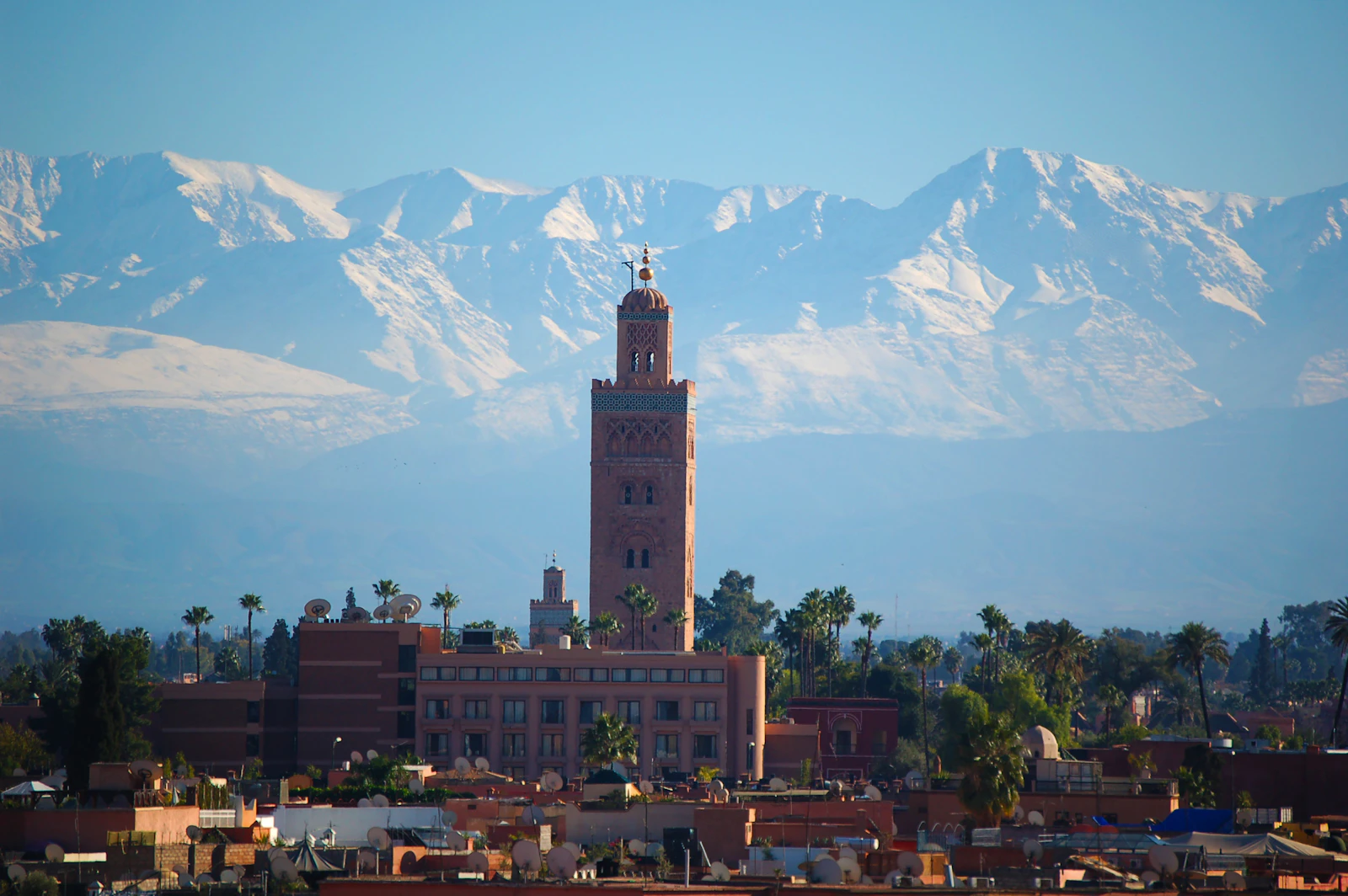
On this page
- How many days in Marrakech do you actually need?
- 2 days in Marrakech: the highlight run
- 3 days in Marrakech: the standard itinerary, day by day
- 4 and 5 days in Marrakech: adding the slower parts
- 7 days in Marrakech: when the city becomes a base
- How long to stay in Marrakesh: the right length for every traveller
- What to see in Marrakech, in priority order
- Day trips from Marrakech: which ones, and how many
- Where to stay in Marrakech, and how your address changes the day count
- When to visit Marrakech, and how the season changes your day count
- Frequently asked questions
How many days in Marrakech do you need? Three full days is the practical minimum for most travellers, and four or five is the sweet spot when day trips, a hammam and unhurried wandering are part of the plan. Two days works as a fast highlight run.
How many days in Marrakech do you actually need?
The number of days you need in Marrakech is set less by how much there is to see than by how long you can keep your attention up. The medina is walkable: the square, the souks, the palaces, the gardens and the old Jewish quarter all sit within a short walk of each other. A second day in the souks is not wasted, but a fourth day inside the walls usually is, unless you have a specific reason to be there.
So the practical answer is a range, and which number you pick depends on what you want out of the trip:
- 2 days — the highlight run. Pick this if you are already travelling through Morocco and want the atmosphere, not the depth.
- 3 days — the standard trip. Pick this if Marrakech is the main point of your journey. This is the answer for most first-time visitors.
- 4 to 5 days — the comfortable trip. Pick this if you want two day trips, a hammam, a class, and at least one day with nothing booked.
- 6 to 7 days — the base trip. Pick this only if you are combining Marrakech with the Atlas, the Sahara or the coast.
The cheapest test is to look at your own itinerary rather than the city's list of attractions. Count the days you have already booked elsewhere, and count how many of those are spent in a city you can walk around. What is left over is your real answer, and it is usually shorter than the number of sights you feel you owe yourself.
2 days in Marrakech: the highlight run
Two days is enough for the headline sights, but it is a checklist trip rather than a visit, and the difference shows in the evenings. You will have seen the important things and you will not have absorbed the place.
What fits comfortably into two days:
- Jemaa el-Fnaa after dark, when the square becomes the thing it is actually famous for — the food stalls, the smoke, the drummers, the whole evening shifting from a car park into a stage.
- The souks — an unhurried loop rather than a straight line. Start at the square edge, work north, and let the alleys decide the route.
- One palace — the Bahia Palace is the busiest and the most decorated; the Saadian Tombs are quieter, more atmospheric, and sit within a short walk of them.
- One garden — Majorelle Garden is the famous one, with the blue villa and the cactus collection. The Saadian Tombs and the Menara area are the quieter alternatives.
- The Mellah — the old Jewish quarter next to the Koutoubia, with its museum and the small synagogue beside it.
What does not fit, whatever you tell yourself on the flight: a day trip, a hammam done properly with time to sit in it, and the Ben Youssef Madrasa if you want to look inside. Trying to add a day trip to a two-day trip is the most common planning mistake, and it produces a worse version of both.
Two days also puts real pressure on where you sleep. Staying inside the medina is close to essential at this length — the difference between a five-minute and a forty-minute walk to the square changes what you do with the evenings.
3 days in Marrakech: the standard itinerary, day by day
Three days is the standard trip, and it works because it splits the medina across two half-days and spends the third entirely outside the city. Almost every traveller who later complains that Marrakech was disappointing stayed three days and kept all three of them inside the walls. Getting the Marrakech itinerary length right is mostly about ordering those days correctly, because the medina fights you in the middle of the day and rewards you early and late.
Day one is for orientation. Arrive, drop the bags, walk to the square before the heat, and let the souks happen to you rather than the other way round. Wander in one direction only, stop for tea when you see a terrace you like, and keep the evening for Jemaa el-Fnaa after the stalls have set up.
Day two is for the monuments. Start early with the Koutoubia and the Kasbah district, work down to the Saadian Tombs and the Mellah, take a break in the middle of the day when the light and the heat are at their worst, and finish with a garden, a hammam, and dinner somewhere that takes no reservation.
Day three should be outside the city. The Atlas Mountains and the villages of Imlil, the Ourika Valley with its waterfalls and olive groves, or a longer run toward the coast. The options are in the day trip section below, but the principle is fixed: one full day out, because the contrast is what makes the medina readable afterwards.
If your three days are not consecutive, or if you arrive very late and leave very early, treat it as a two-day trip and move one sight forward rather than compressing everything. The travel days are not free days, and pretending otherwise is how people end up spending their last morning in a taxi.
4 and 5 days in Marrakech: adding the slower parts
Four and five days are where the city stops being a checklist and starts being a place, because you stop scheduling the medina and start using it as a home base. The extra days are not for more sights — you have already seen the sights — they are for the things that need time to be worth anything.
Day four is most useful as a second day trip, and the best candidates are different from the first. If day three was the high Atlas and mountain villages, day four is more likely to be the coast, a market town, or a longer drive to the waterfall valleys. If day three was the coast, day four is the Ourika Valley or a cooking class, which takes most of a day and leaves you with a full stomach and a new set of skills.
Day five should have nothing in it. This is the day that first-time visitors refuse to give themselves and then regret not giving themselves. A hammam with a scrub and a long rest, a morning spent in the same café reading, a second pass through the souks without buying anything, an afternoon of writing or working. It is also the day that gives a longer trip room to breathe, and the day that lets a bad-weather day be absorbed without wrecking the plan.
Two practical notes. A hammam is not a two-hour activity on a sightseeing list — the standard session is short, and the point is that you go back to it, ideally in the evening after the heat, with nothing scheduled afterwards. And a cooking class or a small-group workshop is the single most reliable way to spend a morning productively in the medina, because you are inside the market learning rather than outside it walking past.
At five days most people have a complete picture of the city and are ready to move on. That is the signal to plan the rest of the Morocco trip properly — a Marrakech trip length of five days pairs badly with a sixth day inside the walls, but it pairs well with a desert leg or a stretch of the coast.
7 days in Marrakech: when the city becomes a base
Seven days only makes sense if the city is your base for the western part of a longer Morocco trip, rather than a stop on the way somewhere else. The mistake is treating seven days as seven days of Marrakech, which produces four days of nothing in particular and a pair of tired feet.
Structurally, a week in Marrakech usually looks like this: three or four days in the city itself, one long day trip into the Atlas, one day on the road to the Sahara or the coast, and the rest used for the slower things — a hammam, a class, a market morning, a day in a garden. The city is where you sleep and eat, not where you spend every hour.
This is where tour operators become relevant rather than optional. A Sahara departure from Marrakech usually wants three or four days of its own, and an Atlas-and-desert combination usually wants closer to a week, because the driving is the point. Both pull you away from the medina for a chunk of time, which is exactly why a seven-day base and a seven-day city stay are not the same trip. The routing, the number of days on the road and the overnight stops are worth checking before you commit.
There is one more reason to stay a week: recovery. Long-haul arrivals, hot days and long walking add up, and a spare day in the middle of a week is the difference between enjoying a country and remembering it as a blur of riad corridors. If your seven days include four days of touring plus three days in the city, you are still spending more time in the medina than most visitors to Morocco do in their whole trip. The longer routes out of the city, including the Marrakech to Sahara private tour and a wider Morocco loop, are built around exactly this shape of week.
How long to stay in Marrakesh: the right length for every traveller
How long to stay in Marrakesh depends less on your appetite than on three things: whether you want day trips, whether you are travelling with children, and how much of the medina you actually enjoy walking through. The right trip length for one traveller is wrong for the next, which is why a single number answers the question badly. This is the section to read twice if you are still torn.
- First-time visitor — 3 days. Enough to see the whole medina without rushing and to take one day trip. Below three, you are checking things off; above three, you need another reason to be here.
- Repeat visitor who knows the medina — 2 days. You have done the square, the souks and the gardens. What you want now is a base to go out from — a day trip, a hammam, a week of the coast.
- Family with older children — 3 to 4 days. Slower pace, a pool, a shorter medina route, and a day trip that does not involve a long bus ride. Very young children cut it to 2 days comfortably.
- Family with young children — 2 days. The medina's scale and the traffic are hard work. Two days, a riad with a terrace, and a lot of time in the gardens.
- Photography-focused visitor — 4 days. You need dawn light, mid-morning colour and the blue hour, which means moving at low intensity and shooting the same streets more than once.
- Budget traveller on a fixed schedule — 2 days, often a transit stop. The city is cheap to stay in and cheap to eat in, but the distances inside it are real. Plan a tight list.
- Slow traveller, or anyone combining with the rest of Morocco — 5 to 7 days. Use the city as a base and accept that you will not see everything inside the walls.
- Anyone on a fixed tour itinerary — follow the tour. This is the important exception. If your trip already includes a desert or mountain leg, the medina days should be planned around it, not added on top of it.
Notice that the variables are the same across every row: day trips, pace, and whether the city is a destination or a base. Get those three right and the number of days follows without any more theory.
What to see in Marrakech, in priority order
The priority list is much shorter than most guides give you, and the order matters more than the length. If you have three days, this is what you are fitting in — and if you have two, you are cutting from the bottom of it.
- Jemaa el-Fnaa. The square itself is only the half of it that matters; the other half is the evening. Come at dusk for the transition and stay for the food stalls, and treat the rooftop terraces with a mint tea as part of the experience rather than an optional extra.
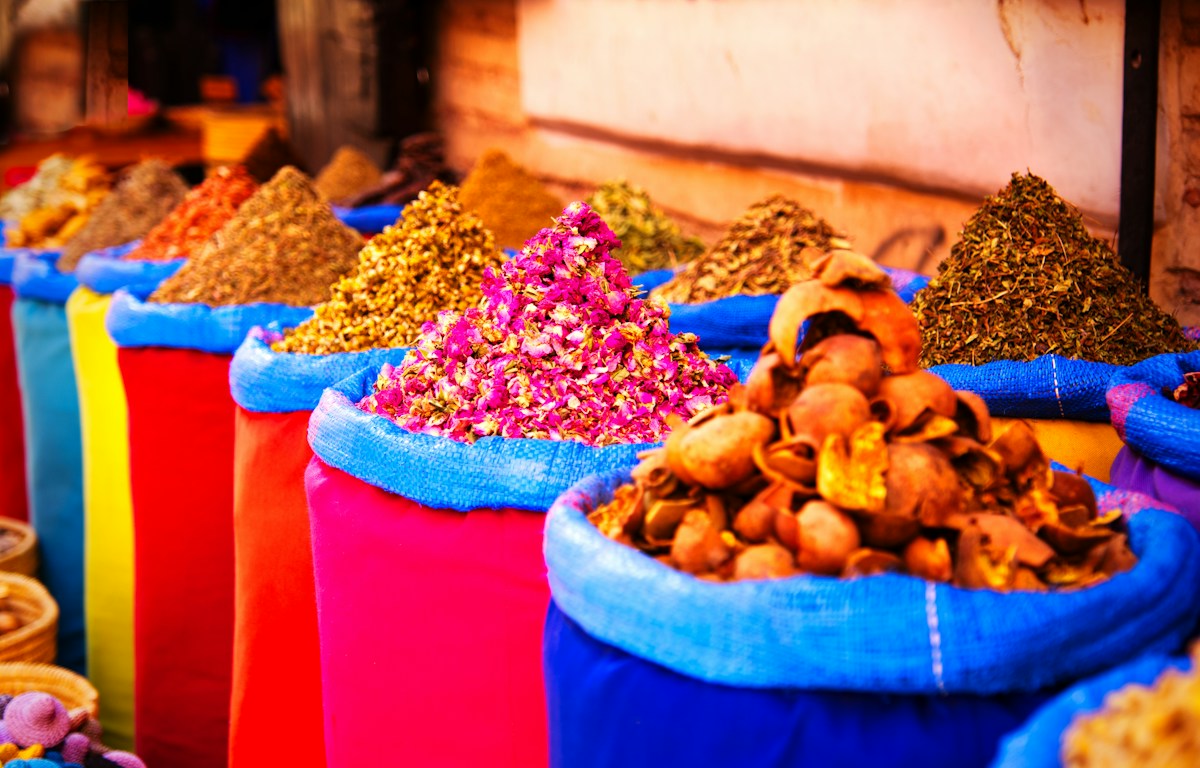
- The souks. One continuous system of streets west of the square, with leather, metal, textiles and spices in different quarters. Go on foot, go slowly, and decide in advance what you will not buy, because you will be offered everything.
- The Koutoubia and the Kasbah district. The minaret is the landmark you can see from almost anywhere, and the streets around it are the most peaceful part of the medina. The mosque itself is not open to non-Muslims, which is why it is a landmark rather than a visit.
- The Mellah. The old Jewish quarter, with its museum and the small synagogue next to it, and the atmosphere of a neighbourhood that changed completely in a few decades. It is quiet, compact, and a counterweight to the souks.
- Bahia Palace and the Saadian Tombs. Two different moods two streets apart. Bahia is decorated and busy; the tombs are restored, spare and melancholy, with a view over the rooftops.
- Majorelle Garden. The famous blue villa, the cactus collection, and the studios. It is busy at the wrong hours and calm at the right ones, which is the whole trick.
- The Ben Youssef Madrasa. The finest interior of carved plaster, cedar and geometry in the medina, and one of the few interiors worth paying to enter.
- Agdal and the Menara Gardens. The southern, greener, calmer half of the city, and the best place to walk when you have already had enough of the souks.
Notice what is not on this list: the Agafay desert and every other desert outing, which is not Marrakech at all, and the newer developments on the edge of town, which are worth seeing if you have a car and an afternoon but do not need to be on a first-visit list.
Day trips from Marrakech: which ones, and how many
Day trips are the biggest single lever on how many days you need, because they add variety without adding sightseeing time inside the walls. The trade-off is time in a vehicle: anything over an hour each way costs you more than it looks like on paper.
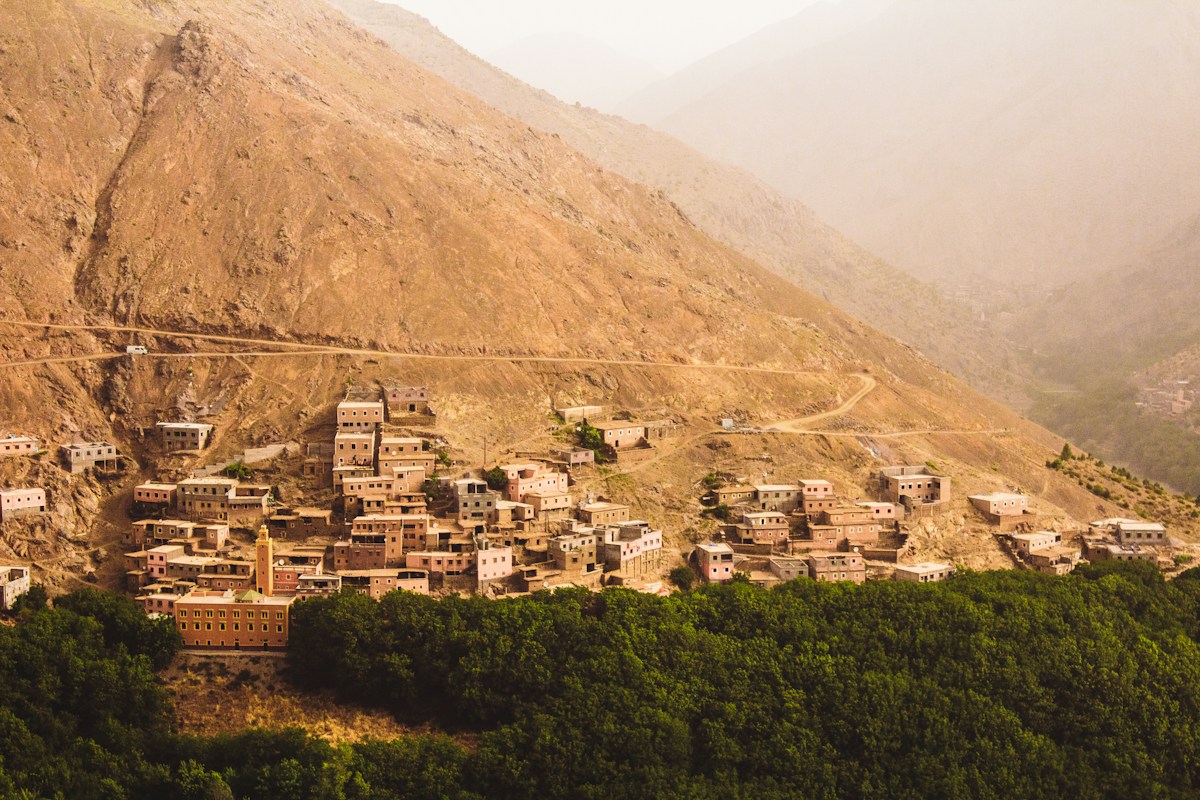
- The High Atlas and Imlil. Roughly an hour and a half each way, depending on the road and the stops. Berber villages, terraced valleys, and mule tracks into the mountains. This is the most popular and the most worthwhile, but it is a long day.
- The Ourika Valley. Closer — around half an hour. Waterfalls, olive groves, and a walkable valley floor. The sensible choice for a half day or for families with children.
- Essaouira. A full day, on the coast, and a genuine change of scenery: white walls, a harbour, a windswept beach and a very different pace. It is the strongest single day trip for a first visit, because it is a city rather than a view.
- Agadir and the Atlantic coast. Another full day in the other direction, with a long beachfront promenade and a more resort-shaped city. Worth it if the beach is the point of your trip; the medina is not.
- The waterfall valleys beyond Ourika. Quieter and wilder than the main valley, and a longer drive. Good if you want a hike rather than a stop.
- Ait Ben Haddou and the Ouarzazate road. A long, full, sometimes exhausting day, and more of a transit than an excursion. Usually worth it as part of a longer route rather than a day trip out and back.
The practical rule: one day trip on a three-day visit, two on a four- or five-day visit, and be honest that more than two turns the trip into a touring holiday. Choose at most one long day and one short one, put them on non-consecutive days, and keep at least one full day in the medina in between — the contrast is what makes the city feel like something rather than a place you passed through.
Each of these needs a vehicle, and the trade-off is between a shared transfer, a private car and driving yourself. The mountain roads are narrow and busy, and organised transport is the lower-stress option unless you are used to them. The coastal routes are the easiest to drive.
The number matters as much as the destination. On a three-day visit you have room for exactly one, and the temptation to book a second is strongest precisely when you should resist it — a two-day trip with two day trips and no time in the medina is a worse trip than a three-day trip with one. If a second day trip matters to you, take the fourth day rather than cutting the medina down to one.
Where to stay in Marrakech, and how your address changes the day count
Where you stay changes your usable day more than almost anything else, and for a short trip the real choice is between inside the medina and just outside it. This is the single question that quietly adds or removes half a day from a three-day itinerary.
- Inside the medina, in a riad. Minutes from the square and the souks on foot, with the roof terrace and the calm of a courtyard behind a heavy door. The default choice for a first visit, and the one that makes two days viable at all.
- Guéliz, the modern quarter. Wide avenues, restaurants, and the sort of pavement that makes the medina feel like a holiday. Ten to fifteen minutes on foot or a short taxi ride from the square, and much easier for a wheelchair or a large suitcase.
- Agdal and Hivernage. The southern, greener side, with the gardens, a few large hotels and a quieter street pattern. Good if you want space and a pool after a day in the crowd.
- The Palmeraie. The palm groves on the edge of the city, where most of the larger resorts sit. Twenty-five minutes or more from the square, which is a real commute twice a day.
Two practical consequences follow. A riad in the medina costs you more in noise and stairs than a room on a wide avenue, and it saves you roughly half an hour of walking every day — which over four days is an entire day back, and is the reason most short itineraries work better from inside the walls.
Second, medina addresses are hard to describe. Give the name of the riad and the nearest landmark rather than a street number, expect a guide to meet you at a specific point on the first day, and expect to walk the last few minutes through alleys that look identical. That is normal, but it is easier to plan around if you know it in advance. The neighbourhood breakdown on our Marrakech city page covers the specific areas.
When to visit Marrakech, and how the season changes your day count
The best time to visit Marrakech is spring or autumn, but the season changes the shape of a day more than it changes the number of days you need. A week in the height of summer and a week in October are the same length and quite different trips.
- Spring. Warm, occasionally wet, and the season with the most reliable daylight. The almond and cherry blossom in the outer groves come early in the year and are worth a specific trip if the timing lines up.
- Autumn. The most comfortable stretch: warm afternoons, cool evenings, and a medina that is busy but not exhausted. This is the default recommendation for a first visit.
- Winter. Mild by day and genuinely cold at night, especially in the riads, which retain heat poorly. You lose the terraces and the outdoor evenings, and you gain clear air and empty souks.
- Summer. The real consideration is heat. The middle of the day is unusable outdoors, which pushes activity to dawn, to the evening, and into the hammams and the gardens. You do not need more days to cover the same ground — you need fewer hours of it, and a slower rhythm.
Two calendar effects are worth knowing in advance. Ramadan shifts the rhythm of the whole city: the square fills in the evening rather than at night, and daytime hours behave differently. And the dates of the Islamic new year move each year, so a trip that lands next to one of them will feel like a different city entirely. Check the calendar for the specific year you are travelling in rather than assuming a fixed pattern.
The season does not change the number of days you need. It changes how tiring each day is, and for summer that means either an early start or a slower, indoor-heavy plan — which is its own kind of trip, and a good reason to look at what the hammams and the museums can hold on their own.
Frequently asked questions
Can I see the main Marrakech sights in one day?
You can see the headline sights in one day, but you will see them as a list rather than a place. One day realistically covers the square, the Koutoubia, one palace, the souks and a garden — a good first impression and a poor trip. If you only have one day, spend the morning in the medina, take the afternoon slowly, and stay at the square in the evening. Two days is the shortest trip that does not feel rushed.
Is Marrakech worth adding to a longer Morocco itinerary?
Yes, and it is usually the strongest single stop on a first trip to the country, because it gives you the medina, the souks and the evening atmosphere the other stops do not have. On a two-week itinerary, four to five days in Marrakech with a desert leg and a couple of city stops around it is a well-balanced shape. The cities east of here are covered in our Fes and Casablanca guides, and the Morocco destination page puts the whole route in one place.
How many nights should I book for a Marrakech and Sahara tour?
Book the desert and the city separately, because they are different kinds of time. A Sahara departure out of Marrakech usually runs for three or four days on its own, with the driving, the desert camp and the return journey inside that window, and your days in the medina are not interchangeable with it. Book the city nights around the tour, and leave a buffer day before your flight. The routes on our tours page show how the days are structured.
Do I need a driver for day trips from Marrakech?
Not always, but it is the lower-stress option in the mountains. A shared transfer is cheapest and puts you with other travellers, which works well for the Ourika Valley and the standard Atlas itinerary. A private car is more expensive and far more flexible for a family or a short trip, and for anyone who does not want a fixed coach schedule. Driving yourself is straightforward on the coast and demanding on the mountain roads.
What are the common mistakes first-time visitors make with their days?
Five mistakes account for most disappointing trips. Spending all three days inside the medina, when one day outside it changes how the medina feels. Planning the middle of the day as if the sun is not a factor. Treating Jemaa el-Fnaa as a daytime square when it is an evening one. Booking far from the centre and losing an hour a day to taxis. And, most common of all, arriving the night before an early flight and losing the first day to sleep.
Should I plan my Marrakech days in advance, or decide as I go?
Do both, in a specific split. Book the fixed things before you arrive — the first two days, the day trip, and the booking for the dinner you care about. Leave the rest open. The medina rewards aimlessness in a way that a pre-planned checklist destroys, and the thing you end up loving in the square is rarely the thing you scheduled in advance.