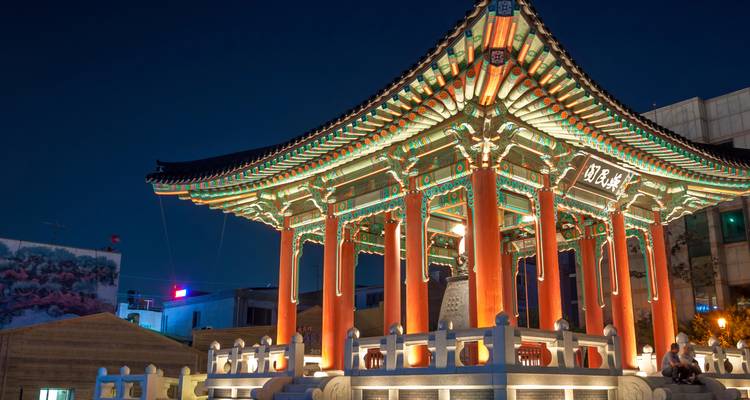
Explore Daejeon, South Korea

A vibrant hub of science, culture, and nature in the heart of South Korea.

explore
wb_sunny

24°C / 75°F

Sunny in Daejeon

trending_up

Peak Season

High visitor demand

Daejeon at a glance

Daejeon is a major South Korean city with an estimated population of about 1.5 million residents. It experiences a temperate climate with hot, humid summers and cold, dry winters, while spring and autumn offer mild temperatures and lower rainfall. Travelers typically find April‑May and September‑October to be the most comfortable periods for sightseeing and outdoor activities.

palette Culture & Art
restaurant_menu Culinary Heritage
Daejeon View
Daejeon Landmark
Daejeon Street

Things to Do in Daejeon

Curated experiences led by local experts.

View All Activities arrow_forward

Map View

Explore Daejeon on the map

open_in_new Open in Google Maps
place

Daejeon

The map is centred on Daejeon.

36.350, 127.385

Why travel to Daejeon?

The city’s mix of research institutions, extensive parklands, and cultural venues makes Daejeon ideal for business travelers, families, and visitors interested in science and nature. Short‑term trips can focus on museum tours and park walks, while longer stays allow exploration of local cuisine, historic neighborhoods, and nearby mountain trails.

palette Culture & Art
restaurant_menu Culinary Heritage
Daejeon View
Daejeon Landmark
Daejeon Street

Daejeon travel blogs

Stories and guides connected to Daejeon and the surrounding destination.

More in South Korea

Browse more city pages across South Korea.

Frequently Asked Questions

When is the best time to visit Daejeon?

expand_more
The most favorable months for visiting Daejeon are April through May and September through October. During these periods the weather is mild, rainfall is moderate, and outdoor attractions such as parks and museums are comfortable to explore. Temperatures typically range from 15 °C to 22 °C, providing pleasant conditions for sightseeing.

What is the climate like throughout the year in Daejeon?

expand_more
Daejeon has a temperate continental climate with four distinct seasons. Summers are hot and humid, often reaching 30 °C, while winters are cold and dry, with temperatures occasionally dropping below freezing. Spring and autumn are milder, featuring temperatures between 10 °C and 22 °C and lower humidity, making them popular for outdoor activities.

How many people live in Daejeon?

expand_more
Daejeon’s population is estimated at roughly 1.5 million inhabitants. This figure reflects the city’s status as one of South Korea’s larger urban centers, supporting a diverse community of students, researchers, and business professionals, as well as a growing number of visitors drawn to its cultural and scientific attractions.

What currency is used in Daejeon and which payment methods are common?

expand_more
The South Korean won (KRW) is the official currency in Daejeon. Credit and debit cards are widely accepted at hotels, restaurants, and shops, especially those bearing Visa, MasterCard, and Korean domestic networks. Many establishments also support mobile payment platforms such as Samsung Pay, Naver Pay, and KakaoPay, providing convenient cash‑less options for travelers.

Do I need a visa to travel to Daejeon, South Korea?

expand_more
Visa requirements depend on the traveler’s nationality. Citizens of many countries, including the United States, Canada, the European Union, and Australia, can enter South Korea visa‑free for short stays up to 90 days for tourism. Visitors from other nations should check the latest South Korean visa policies and apply for the appropriate visa before arrival.

What are the top museums and science centers to visit in Daejeon?

expand_more
Daejeon is known for its science and technology attractions. The National Science Museum offers interactive exhibits on physics, space, and engineering, while the Daejeon Expo Park showcases innovations from the 1993 World Expo. Both venues provide educational experiences for families and visitors interested in Korea’s scientific achievements.

Which parks or natural areas are popular for outdoor activities in Daejeon?

expand_more
Daejeon features several well‑maintained parks that attract locals and tourists. Daejeon O‑World combines a zoo, botanical garden, and amusement area, while Jangtaesan Recreational Forest offers walking trails and seasonal foliage. The city's extensive riverfront parks along the Gapcheon and Yudeung streams provide spaces for cycling, picnicking, and leisurely walks.

Are there historic or cultural sites worth visiting in Daejeon?

expand_more
Yes, Daejeon blends modern development with cultural heritage. The historic Hanbat Arboretum includes traditional Korean garden elements, and the Daejeon Confucian Academy (Daejeon Hyanggyo) reflects the city’s scholarly past. Additionally, the Uam Historical Park preserves remnants of ancient fortifications and offers insight into regional history.

What local dishes should I try while in Daejeon?

expand_more
Daejeon’s culinary scene highlights regional specialties such as “Daejeon-style galbi jjim” (braised short ribs) and “Kongnamul gukbap” (bean sprout soup with rice). The city is also known for “Daejeon kalguksu,” a hand‑pulled noodle soup served with fresh vegetables. These dishes showcase the flavors of central Korea and are widely available in local eateries.

Where can I find traditional Korean restaurants in Daejeon?

expand_more
Traditional Korean restaurants are concentrated around the downtown area near the Daejeon Station and the Seodaejeon district. Neighborhoods such as Gung-dong and Yuseong‑gu host family‑run hansik houses offering set menus of banchan, grilled meats, and stews. Visitors can also explore eateries near the Daejeon Expo Park for a mix of classic and contemporary Korean cuisine.