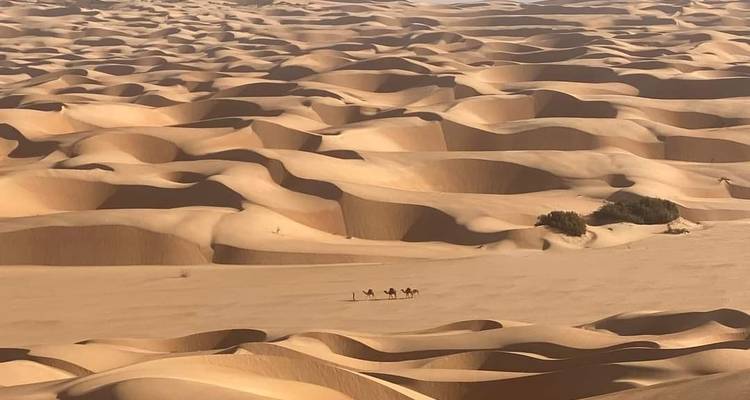
Mauritania Coast

Discover Mauritania

Essential facts and travel guidance for Mauritania.

1 Tours
6 Guides
5 Cities
payments

Currency

Mauritanian ouguiya (MRU)

translate

Language

Arabic (French widely used)

groups

Population

Approximately 4.9 million

passport

Visa

Visa required for most travelers; some may obtain visa on arrival

security

Safety

Moderate safety; exercise usual precautions

savings

Travel Cost

Moderate; costs comparable to other West African destinations

wb_sunny

Best Visit

October – April

Mauritania at a glance

Mauritania, located in West Africa, is home to roughly 4.9 million people and operates on Greenwich Mean Time (UTC+0). The official language is Arabic, with French also common in business and tourism. The national currency is the Mauritanian ouguiya (MRU). Most visitors need a visa, though some may obtain one on arrival. Safety levels are moderate, so standard travel precautions are advised. The climate is arid and desert‑like, making the dry months from October to April the most comfortable for travel. Major urban centres include Nouakchott, Nouadhibou, Kiffa, Dar Naim, Néma, Mbera, Ksar, Kaédi, Zouérat, Tevragh Zeina, Bougadoum, and Sélibaby.

Mauritania view Mauritania view

Map View

Explore Mauritania on the map

Centered on the country’s main cities and scaled to keep the full destination in view.

place 5 Attractions public Google Maps style
search
Search area
Mauritania
Country location
Mauritania
Centred from 5 city points.
open_in_new Open in Google Maps

Mauritania travel overview

Travelers to Mauritania often seek desert experiences, cultural city tours, and coastal visits. The dry season between October and April offers the most reliable weather for exploring the Sahara landscape and historic towns. Moderate travel costs and a range of cities support itineraries that combine natural scenery with local markets and heritage sites, while safety guidance helps ensure a smooth journey.

Mauritania view Mauritania view

Essential Travel Tips

Book Early

Popular routes and hotels fill quickly in peak season.

Mix Transport

Use trains between cities and local transit inside centers.

Stay Central

Base yourself near a walkable area to save time.

Cash Ready

Some small vendors still prefer cash for smaller purchases.

Pack Smart

Comfortable shoes matter more than anything else.

Frequently Asked Questions

What is the best time of year to travel to Mauritania? expand_more
The most suitable period for visiting Mauritania is from October through April. During these months the country experiences its dry season, which brings lower humidity, reduced rainfall, and more comfortable temperatures for outdoor activities and travel between destinations.
Do I need a visa to enter Mauritania? expand_more
A visa is required for the majority of international travelers entering Mauritania. Certain nationalities may be eligible for a visa on arrival for tourism purposes, but it is recommended to verify the specific requirements with the nearest Mauritanian diplomatic mission before departure.
What currency is used in Mauritania and can I exchange money there? expand_more
Mauritania uses the Mauritanian ouguiya (MRU) as its official currency. Currency exchange services are available at major banks, hotels, and the international airport in Nouakchott. Travelers should also consider carrying some cash for use in smaller towns where electronic payment options may be limited.
Which language will I encounter most often while traveling in Mauritania? expand_more
Arabic is the official language spoken throughout Mauritania, and it is the primary language used in government and daily life. French is also widely understood, especially in business contexts, tourism, and urban areas, providing an additional communication option for many visitors.
How many major cities can I visit and which are the most visited? expand_more
Mauritania has twenty recognized cities. The most frequently visited include the capital Nouakchott, the coastal hub Nouadhibou, and inland towns such as Kiffa, Kaédi, and Zouérat. These locations offer a mix of administrative, commercial, and cultural experiences for travelers exploring the country.
What safety precautions should I take when traveling in Mauritania? expand_more
Safety in Mauritania is considered moderate. Visitors should stay informed about local conditions, avoid traveling alone at night in remote areas, keep valuables secure, and follow guidance from local authorities. Registering with your embassy and having a reliable means of communication are also advisable practices.
What climate can I expect during a visit to Mauritania? expand_more
Mauritania has an arid desert climate characterized by very hot daytime temperatures and cooler nights, especially in the interior regions. Rainfall is scarce throughout the year, with the dry season offering the most stable weather conditions for travel and outdoor activities.
Which cities are known for offering cultural experiences in Mauritania? expand_more
Cultural experiences are prominent in Nouakchott, the capital, where markets and museums reflect the nation's heritage. Nouadhibou provides a blend of maritime and Saharan influences, while towns such as Kiffa, Kaédi, and Sélibaby showcase traditional architecture, local crafts, and regional customs.
What are common ways to travel between cities in Mauritania? expand_more
Inter‑city travel in Mauritania is primarily conducted by road, using private cars, shared taxis, or bus services that connect major towns. Limited domestic flights operate between a few key airports, offering a faster alternative for longer distances, especially when traveling to remote mining areas.
Are there international airports in Mauritania? expand_more
Yes, Mauritania has international airports that serve the country. The main gateway is Nouakchott–Oumtounsy International Airport, which handles most inbound and outbound flights. Additional airports, such as those in Nouadhibou and Zouérat, provide limited international and regional connections.