Lilshira


Airbus A350-1000ULR sets new world distance record for commercial airliner
Airbus A350-1000ULR has broken the Guinness World Record for the longest commercial flight by distance. The achievement was announced on 11 November 2026 and concerns airlines developing ultra‑long‑range services, as well as passengers interested in future nonstop routes.
In this story
At a glance
- What changes
- Airbus A350-1000ULR set a new distance record for commercial flights
- Timing
- Record announced on 11 November 2026 after a July 2026 flight
- Who is affected
- Airlines planning ultra‑long‑haul routes and passengers awaiting new nonstop services
The details
- Announced by
- Airbus
Record achievement
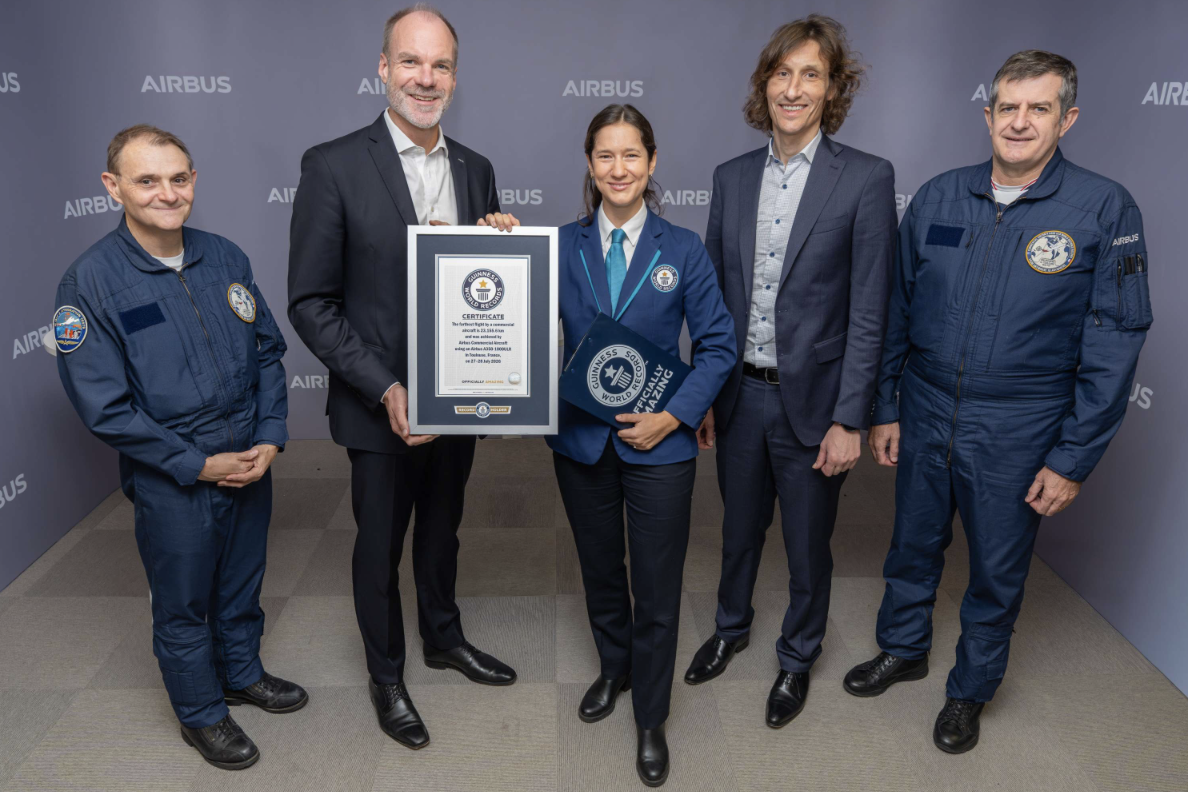
The Airbus A350‑1000ULR (Ultra‑Long Range) received the official Guinness World Records certificate in Toulouse after completing the longest flight by distance ever recorded for a commercial airliner. Validation was provided by the International Aeronautical Federation and Flightradar24.
- Distance covered: 12,503 nautical miles (23,155 kilometres)
- Flight duration: 24 hours and 24 minutes
Flight details
The test flight, call sign AIB35LR, departed Melbourne, Australia, at 17:27 local time on 27 July and landed in Toulouse, France, at 09:51 local time on 28 July. Thirteen people were aboard, including Airbus test pilots, Qantas pilots, engineers and an IAF representative. The route crossed three continents, two oceans and the International Date Line.
- Take‑off from Melbourne, over Sydney, then north‑easterly across the Pacific
- Crossed Los Angeles, North America, the Atlantic, over London before reaching Toulouse
Implications for Qantas and future routes
The record flight was part of Airbus’s test campaign for Qantas’s Project Sunrise. The A350‑1000ULR’s additional rear centre tank adds roughly 1,000 nautical miles of range, enabling nonstop services between Sydney and London or New York. Qantas has ordered 12 of the aircraft, with the first delivery slated for April 2027 and entry into service on the Sydney‑London route expected in October 2027.
- New nonstop routes could reduce travel time by up to 12 hours compared with current connections
- The aircraft joins the A350 family as the fourth passenger variant
What this means for travellers
Trip planning
- Travelers should watch for Qantas announcements about nonstop Sydney‑London flights from October 2027
- Current bookings are unaffected; the record does not change existing flight schedules
Cost and documents
- No new fees or documentation are required for passengers because of the record flight
- Airlines may later adjust pricing for ultra‑long‑haul services, but no immediate cost changes are indicated
What you need to do
- Passengers interested in future nonstop routes should monitor Qantas news releases
- Travel agents can update product offerings once the A350‑1000ULR enters service
Who this affects
-
Qantas Airways passengers
Qantas is the launch customer for the A350‑1000ULR and will operate the new nonstop routes
-
Long‑haul travellers
The aircraft’s extended range will create new nonstop options between major distant cities
-
Airline industry planners
The record demonstrates feasibility of ultra‑long‑range operations for future fleet decisions
Frequently asked questions
What distance did the Airbus A350-1000ULR fly to set the record?
The aircraft covered 12,503 nautical miles (23,155 kilometres) on the record‑breaking flight from Melbourne to Toulouse.
When was the Airbus A350-1000ULR world distance record announced?
The record was announced on 11 November 2026 by Airbus after the flight took place in July 2026.
How long did the record flight take?
The nonstop flight lasted 24 hours and 24 minutes from take‑off in Melbourne to landing in Toulouse.
Which airline will use the A350‑1000ULR for future nonstop routes?
Qantas Airways is the launch customer and plans to operate nonstop Sydney‑London and Sydney‑New York services with the aircraft.
When will the A350‑1000ULR enter commercial service?
The first A350‑1000ULR is scheduled for delivery in April 2027, with entry into service on the Sydney‑London route expected in October 2027.