Lilshira


Best Time to Visit Marrakech: A Month-by-Month Guide
Back to articles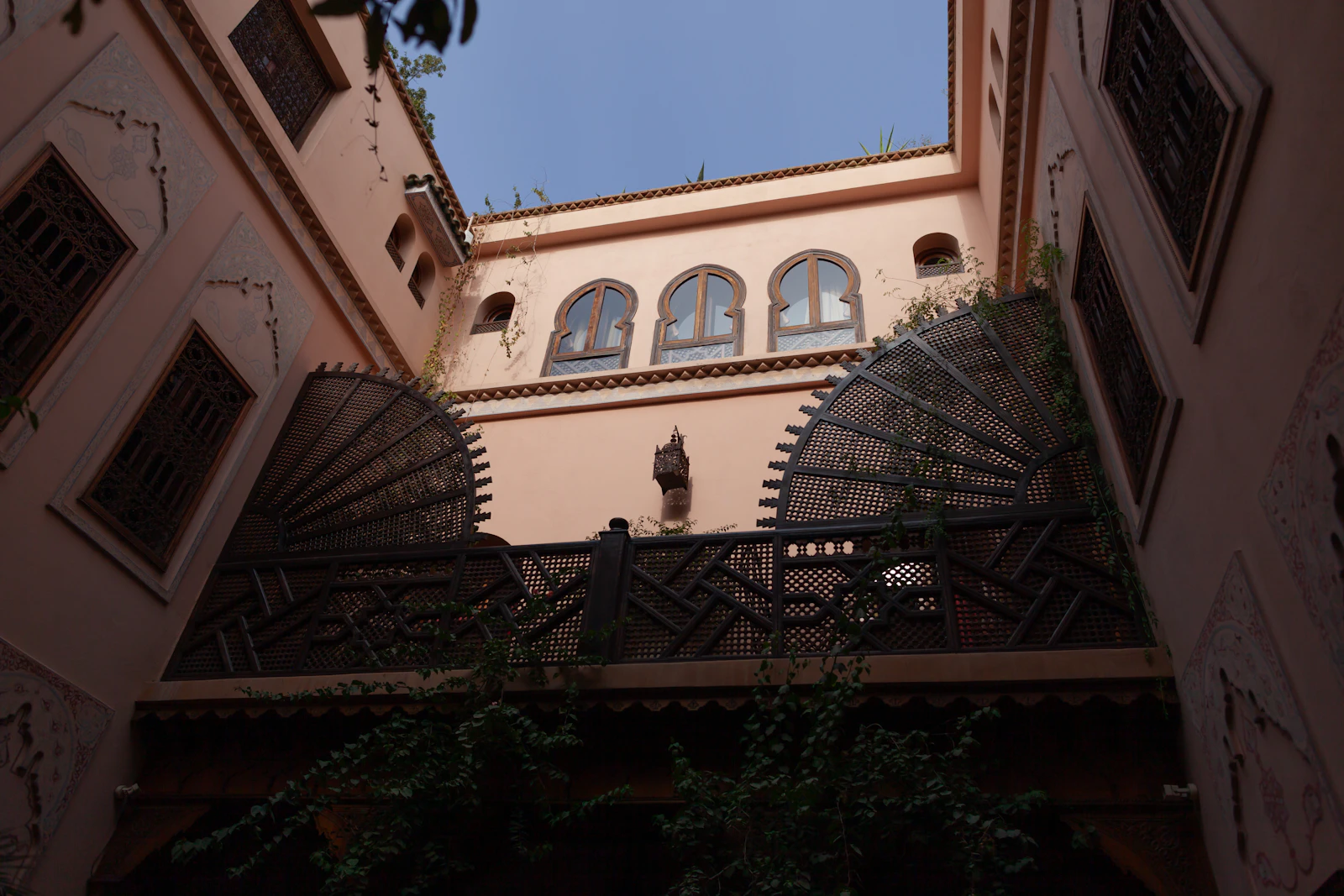
On this page
- When to visit Marrakech: the two windows that work best
- Marrakech weather by month: the twelve-month verdict
- Marrakech spring weather: blossoms, mild days and the tail of the rain
- Marrakech in summer: heat, early starts and the pool
- Marrakech autumn weather: the two months that carry the city
- Marrakech in winter: mild days, cold nights and quiet souks
- Shoulder season in Marrakesh: the value window
- The best time to visit Marrakech for the trip you are planning
- The Atlas valleys and the Sahara keep a different calendar
- Ramadan in Marrakech: what actually changes
- The best month to visit Marrakech depends on the day you want
- Frequently asked questions
The best time to visit Marrakech is from late March to May and from late September to November, when days are warm, evenings are cool and the city is at its most comfortable. Summer is workable but hot, winter is mild by day and cold at night.
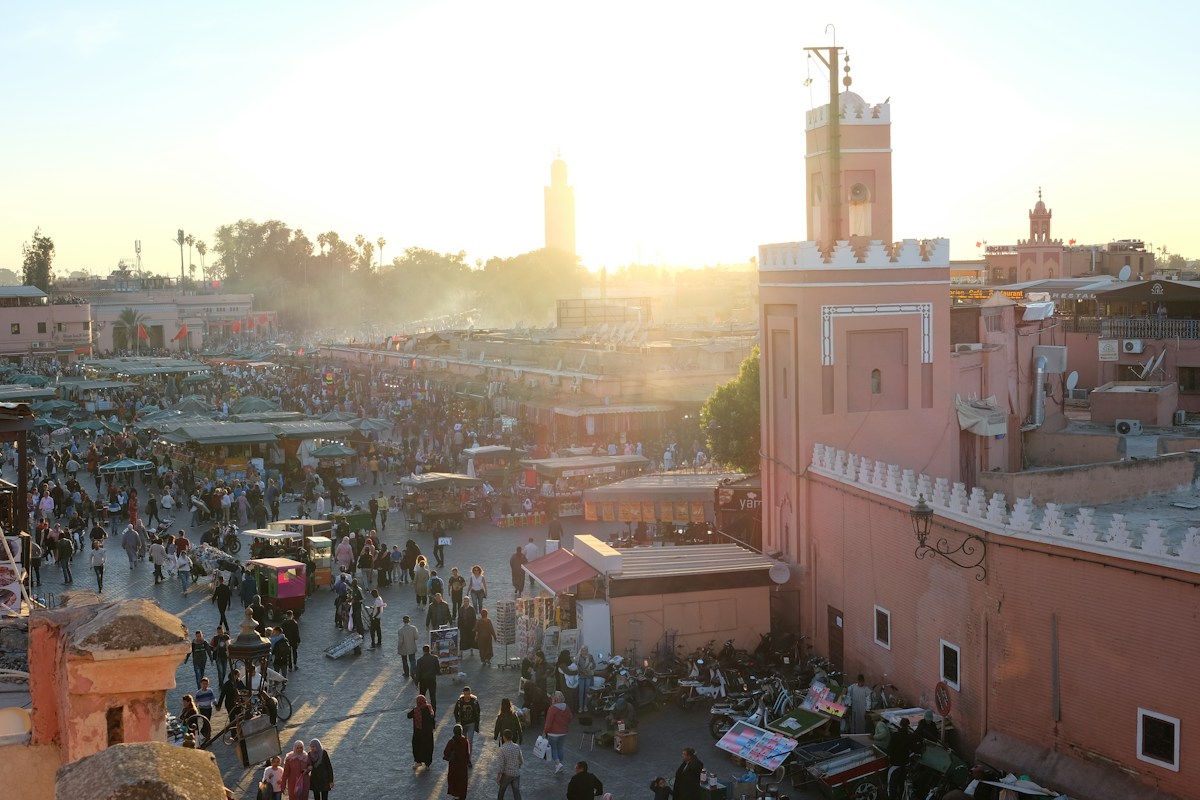
When to visit Marrakech: the two windows that work best
Two windows work best: late March to May, and late September to November. Outside those stretches you are choosing a trade-off rather than making a mistake, but those two periods give the city its most usable weather and its longest days outdoors.
Marrakech sits inland on a plain, with the High Atlas rising to the south and the Atlantic a few hours to the west. That position produces a Mediterranean climate: hot, dry summers and mild winters, with almost all the rain falling in the cold half of the year. There is an inland edge to it as well, because no sea breeze reaches the city to soften the afternoon. Days and nights differ sharply here in every season, and the mountains add a rain shadow, so the High Atlas takes most of the winter moisture while Marrakech itself stays drier than most visitors expect.
Spring and autumn are the payoff. Days are warm without being punishing, evenings need a light layer rather than a coat, and the city's outdoor life runs at full stretch: the terraces, the gardens, and the evening crowds around Jemaa el-Fnaa. Winter delivers bright, clear midday hours and cold nights. Summer inverts the day, so the pleasant hours arrive early and late while the middle of the afternoon belongs to shade, water and closed shutters.
Which window suits you depends on what you want from the trip. If the plan is the medina, the gardens and long meals on a roof terrace, spring and autumn are straightforward. If you want the city with the fewest people in it, the quiet weeks of January and the height of summer empty out more than any other period, at a cost in either cold evenings or heat. If your dates are fixed by work or school, the rest of this guide is about making that month work.
Marrakech weather by month: the twelve-month verdict
The year runs one arc: a cool, occasionally wet winter, a changeable spring that turns warm, a hot, dry summer, and a warm, clear autumn that runs late. As a rule, winter middays are mild enough for a coat-free walk, spring and autumn are the only months when the middle of the day is comfortable in the open, and summer middays are hot enough that walking in the sun is unpleasant.
- January — the coldest month: bright midday sun, cold nights, the quietest medina all year.
- February — like January, but the days lengthen and the first blossom shows outside the city.
- March — the turn of the year: warm afternoons, a few wet days, the greenest landscape Marrakech sees.
- April — the most reliable weather of the year, and the hardest month for rooms.
- May — comfortable at the start, hot by the end, the last month before summer.
- June — dry heat from morning to night, so mornings and evenings carry the sightseeing.
- July — the hottest stretch, when the day must be built around shade, water and early starts.
- August — as hot as July and busier, with visitors from the Gulf and from within Morocco.
- September — hot at the beginning, cooler after the middle, and good value for the weather.
- October — the best all-around month: warm days, cool nights, everything open, terraces in use.
- November — crisp, clear and calm, with cold nights late in the month and good value.
- December — mild, sunny midday hours, cold evenings, and the busiest week of the year at the end.
Read those as conditions, not averages you can bank on. A hot wind from the desert can push an otherwise mild month into an uncomfortable one for days, and one wet week can feel like the season has gone wrong. The same month says little about the mountains an hour away, where it is colder.
Marrakech spring weather: blossoms, mild days and the tail of the rain
Spring is the easiest season to travel in Marrakech, which is exactly why it is also the busiest. Warm days arrive in March and settle by mid-April, evenings stay cool enough to need a layer, and the rain that defines the winter becomes rare after April.
The rainy season in Marrakech is a winter phenomenon. It runs through the cold months, roughly from November to March, and it behaves differently from the rain most visitors know: short, heavy bursts that clear the same day rather than a gray drizzle that settles in for a week. That matters for planning, because a wet morning rarely costs you a full day. It also explains why the countryside looks the way it does in spring. The plains and foothills are green, the irrigation channels run full, and the gardens inside the city are at their strongest of the year.
Spring blossom is the reason some travelers fix their dates long in advance. Almond trees flower first, often while the nights are still cold, and the orchards in the foothill valleys and the terraces beyond them follow a few weeks later. The timing shifts with the weather of the preceding winter, so a cold January pushes the whole display back and a mild one brings it forward. If blossom is the point of the trip, treat the calendar as a rough guide and the forecast as the real decision.
The trade-off is simple. April offers the most dependable conditions of any month, and it is priced and booked accordingly: accommodation fills early and the popular day trips sell out. Late March and May give you most of the same weather with more room to move. What to re-check before booking is the timing of school breaks in your own country, because they cluster tightly in this window and turn an ordinary week into a peak one.
Marrakech in summer: heat, early starts and the pool
Summer heat is the single biggest planning constraint of the Marrakech year, and the way through it is to move your day rather than to give up on the trip. The heat is dry rather than humid, which makes shade effective and evenings genuinely usable once the sun has gone.
Build each day around three parts. Start early, when the souks are opening and the light is soft. Retreat indoors for the middle hours, which is what the museums, the hammams, the galleries and the air-conditioned cafes are for. Then go out again in the evening, when the square fills and the terraces come alive. A courtyard with a plunge pool, a real garden or generous shade stops being a luxury in these months and becomes the difference between an enjoyable trip and an exhausting one, so check what the property actually offers before you book rather than trusting a photograph.
Two kinds of traveler do well in the heat. Anyone who wants the city to themselves finds the medina thinner and the queues shorter than in spring or autumn. And anyone with flexible plans can split the trip: a drive west toward the coast brings markedly cooler air, because the Atlantic stays cold through the summer, and a few nights in Agadir or a similar Atlantic town is the standard way to break up a hot itinerary.
The heat does not close anything down. Every sight, garden and market in the city stays open, and the long evenings mean the outdoor life starts late and runs long. If the atmosphere matters more to you than covering ground, this is the season to take it, as long as you accept that your mornings will start before the sun is high.
Marrakech autumn weather: the two months that carry the city
October and November carry the city, and if your dates are open at all this is the pair to choose between. October gives you the warmer half of autumn and a city in full swing. November gives you clearer air, a calmer medina and better value, with the first genuinely cold evenings arriving late in the month.
The two months fail in different ways, which is the useful way to tell them apart. October is the popular choice, so the medina is busy, the good terraces are contested and the best rooms go early; it is also the month whose weather most reliably does what you hoped. November is the better month for anyone who values space: the light turns long and golden, the crowds thin out, and streets that were shoulder to shoulder a few weeks earlier become calm. The price of that is the cold, which arrives at night first and then starts to bite in the early morning.
Neither month says much about the mountains. In the same week that the city is warm and dry, the passes into the High Atlas can be cold and wet, and by late November the higher valleys are already preparing for winter. If your plan includes a valley or a pass, do not read the city forecast as a forecast for the whole region.
How many days to give the city is a separate question from when to come, and the answer does not change with the season. The companion article on how many days in Marrakech you need works through that by trip type. What the season does change is how those days feel: in autumn you can spend them outdoors from morning until night.
Marrakech in winter: mild days, cold nights and quiet souks
Winter in Marrakech splits into two very different halves of the same day, and the gap between them is what visitors most often underestimate. Between roughly mid-morning and mid-afternoon the city is mild, bright and comfortable for walking. Once the sun drops, the temperature falls quickly and the evenings are genuinely cold.
The reason is architectural as much as climatic. Traditional courtyard houses are designed to stay cool, which is precisely the wrong design in January: they hold shade, the central courtyard is open to the sky, and the tiled floors and thick walls shed heat overnight. Heating in these buildings varies enormously, from a single brazier to proper radiators and underfloor warmth. If you travel in the cold months and you sleep cold, ask directly what heating the room has and whether the courtyard is covered at night.
Rain is the other winter variable. This is the wet part of the year, and although Marrakech is much drier than the coast or the north, a winter visit can still catch a wet spell. Rain usually arrives in short bursts and the city dries fast, so it costs you hours rather than days. If you are routing further north on the same trip, expect more of it: Tangier and the northern coast sit in a wetter, windier climate than the Marrakech plain in the same month.
What winter gives back is the medina with room to breathe. The souks are calm and the squares are local rather than crowded, and the low midday sun keeps the walls lit from the side for most of the day. The trade-off is that you lose the long outdoor evenings: dinner moves indoors, the terraces empty early, and the day ends sooner than you expect.
Shoulder season in Marrakesh: the value window
The Marrakesh shoulder season is the stretch on either side of the peak months, and it is where the value sits: weather close to the best the city offers, before demand catches up with it. It also has a cost, because the weeks either side of peak are the most changeable of the year.
What hotels charge in Marrakech behaves less like a single curve than like several overlapping ones. Accommodation inside the medina responds to the international holiday calendar, while the newer parts of the city respond to Moroccan weekends and domestic breaks. That is why two properties a short walk apart can be moving in opposite directions in the same week, and why the month alone never tells you whether you are getting a good rate.
- Peak — roughly mid-March to May, October, and the last week of December. The highest rates, especially in the medina, and the least choice of rooms. Book early or stay flexible about where you sleep.
- Shoulder — early December, late January into February, and the first half of June. Rates ease while the weather stays workable, which makes this the best balance of comfort and cost for most visitors.
- Low — midsummer and the coldest midwinter weeks, plus most weekdays outside the holidays. Rooms are cheapest and the city is quietest, and the weather asks something of you in return.
Those bands overlap at the edges and they are approximate rather than fixed. A single festival, a long weekend or a school break can lift one week well above the month around it, and rates in a small medina property move faster than rates in a larger one. What to re-check before you commit: the local holiday calendar for your exact dates, and the cancellation terms, since the shoulder weeks are also the ones where weather plans change most easily.
The best time to visit Marrakech for the trip you are planning
Trip shape decides more than the calendar does. A city-only visit, a desert add-on, a trekking leg, a coastal break and a tight budget each point at a different month, and the city's own weather is only one of the inputs.
- A city-only trip. Aim for late March to May or late September to November. You never leave the plain, so the climate of Marrakech is the only one that matters.
- A desert add-on. The Sahara wants the cooler months, and a desert leg in high summer is demanding rather than impossible. Autumn through early spring is the window most routes are built around.
- A trekking trip. Spring and early autumn are the walking months in the High Atlas. High summer is hot at the lower levels, and the winter months put snow on the passes.
- A coastal break. Summer, if the coast is the point of the trip, because the Atlantic is cool when the interior is not. Spring and autumn are better if the coast is an addition rather than the main event.
- A budget-first trip. Midsummer and the coldest weeks of winter, on weekdays. You trade comfort for the lowest rates of the year and the emptiest medina.
Two of those shapes combine easily and two do not. City plus desert works well in autumn and spring, and city plus mountain walking works in the same window. City plus a desert leg in July or August is possible but demanding, and city plus a mountain trek in January is limited by the passes rather than by the city. The Marrakech city page collects what to see inside the walls, and the Morocco destination page is the place to check how the rest of the country fits around your dates.
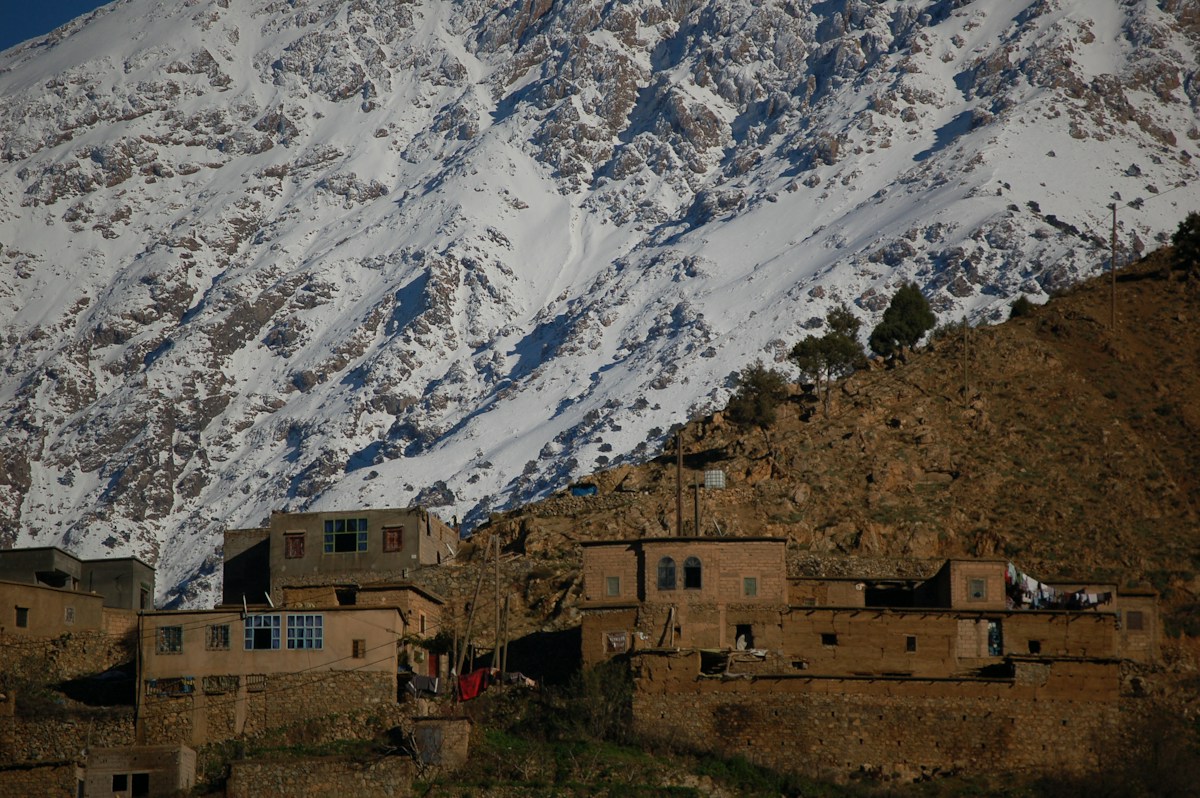
The Atlas valleys and the Sahara keep a different calendar
Higher ground keeps its own calendar, and it matters because most Marrakech trips reach into it: a valley, a pass or a night in the desert. The city can be warm and dry on a day when the mountains an hour away are cold and wet.
Elevation is the first variable. The High Atlas rises steeply south of the city, and temperature falls as you climb, so an altitude village is several degrees cooler than the plain, and the passes colder again, with wind on top. In winter the high passes can carry snow and ice, and road conditions then decide your day more than the Marrakech forecast does. In spring the valleys green up early and walking is at its best. In high summer the altitude is a relief rather than a problem, and the lower valleys hold the heat.
Which valley you choose shifts the season by a few weeks each way.
- Ourika Valley — the closest and most visited, an easy day trip from the city. Best in spring for green terraces and in autumn for clear air, but busy on weekends and holidays all year.
- Ait Bouguemez — further in, higher and quieter, with terraced fields and village guesthouses. A summer and early autumn destination, cold in winter, when access depends on the passes.
- The Sahara — the desert's comfortable season is the cool one, roughly autumn through early spring. Dune nights are cold in winter, and the summer months are extreme.
A desert leg also runs to a fixed rhythm that the mountains do not, because camps and long drives follow a set itinerary rather than your preferences. Desert routes of this kind are built to run outside the worst of the summer heat, and the Marrakech to Sahara private tour is a complete example of the format. What to re-check before you commit: pass conditions and any storm damage on the mountain roads, and whether the operator runs your dates at all.
Ramadan in Marrakech: what actually changes
Ramadan changes the rhythm of the day far more than it changes the weather, and a visitor who knows what shifts will find it an interesting month to travel in rather than a difficult one. It is a lunar observance, so it moves earlier through the calendar each year, and the dates you remember from a previous trip will not apply to the next one.
Daytime is the part that reorganizes. Many restaurants close or serve only at the edges of the day, cafes that usually buzz sit quiet, and opening arrangements at some sights shorten. Eating, drinking and smoking in public during daylight hours is avoided, and alcohol is harder to find than usual. The compensation is the evening. The fast is broken at sunset, and the city shifts into a long, sociable night: the square fills late rather than early, families come out, and the atmosphere is at its most alive well after the hour when a normal evening would be winding down.
Visitors who are not Muslim are not expected to fast, and nobody will ask you to. The etiquette is mostly about discretion: keep water and snacks out of sight in the street, eat in your accommodation or in a restaurant that is open, and dress as you would anywhere else in the medina. Being invited to a fast-breaking meal is one of the real pleasures of traveling in this month, and it happens often.
The practical effects are about timing rather than access. Plan a slower mid-morning start, keep the afternoon light, and treat the evening as the main part of the day. If you want the market at its busiest and the food stalls at full stretch, go later than you would in any other month. What to re-check: the exact start and end dates for the year you are traveling, and the opening arrangements of the particular sights you want to see.
The best month to visit Marrakech depends on the day you want
Daylight is the variable most season guides leave out, and it shapes a Marrakech day as much as temperature does. Days are shortest in December and longest in June, which means the winter city gets a compact window of light while the summer city gets a long one with an unusable middle. Winter days are shorter not because there is less to do, but because the light runs out.
Wind is the part of the climate that surprises visitors most. A hot, dry wind arrives from the desert in some seasons, bringing dust, flat light and a sudden jump in how hot the air feels, even in months that are otherwise mild. Its winter counterpart is a cold wind that makes shaded streets feel raw and pushes everyone toward the sunny side of the square. Neither is guaranteed in any given week, but both are more likely when the seasons are turning, in early spring and late autumn.
Judge a month by the day it lets you have. If you want long evenings outdoors, the answer is late spring through early autumn. If you want a compact, bright day and are content to be indoors by dark, winter delivers that. If you want the widest usable window in the middle of the day, spring and autumn are the only months that reliably give it.
One thing is worth doing before you book: check the forecast again in the final few days, because rain and wind are what long-range forecasts handle least well. The stable parts, daylight, altitude and the shape of the seasons, do not move. One final comparison: the season that suits the city is not always the season that suits your budget, so weigh comfort and cost together.
Frequently asked questions
Does the season change how many days I need in Marrakech?
The season does not change how long you need — a summer day holds less outdoor time while a spring or autumn day can run from morning until night. For the day count itself, the companion guide on how many days in Marrakech you need works through it by trip type.
What should I pack for a Marrakech trip?
Pack for two temperatures in the same day, whatever the season. Bring a light layer for warm middays, something warmer for evenings, and sun protection for the middle of the year. Spring and autumn also call for a light rain shell. Winter needs a proper jacket, because the nights are cold and traditional courtyard houses stay cool. Summer needs loose, breathable clothing and a hat rather than shorts and sandals alone.
How far ahead should I book a riad or a tour?
Book early for the spring window, for October and for the last week of December, when the best rooms in the medina go first. The rest of the year is more forgiving, and shoulder-season weeks can often be booked closer to the date. Small courtyard properties and desert tours fill faster than larger ones because their capacity is limited, so lock in anything that depends on a fixed departure day before you commit to flights.
Is Marrakech worth visiting over Christmas and New Year?
Yes, if you accept what those weeks are. Rates reach their annual peak, the medina is busy, and the places worth staying in need booking well ahead. In exchange you get bright, mild days, a festive atmosphere and long indoor evenings, because the nights are cold. The city empties quickly in the first days of January, which is one of the winter's quietest and best-value weeks.
How reliable are weather forecasts for Marrakech?
Short-range forecasts for the city are generally dependable, so the last few days before you travel are worth checking properly. Beyond about a week, treat any forecast as a rough indication, particularly for rain and wind, which are the hardest parts of Moroccan weather to call at range. The mountains are less predictable again, because conditions change with height and a valley can be wetter and colder than anything the city forecast suggests.
Which months are best for cheaper flights to Marrakech?
Flights follow a different pattern from accommodation. Broadly, the weeks outside school breaks and outside the December holidays are the easiest to fill, and midweek departures tend to be better value than weekend ones. Summer fares can be lower than spring fares even though the city is hotter, so compare the two together rather than assuming that the cheaper month will also be the comfortable one.